Robber fly - Nature photographer Thomas Shahan specializes in amazing portraits of tiny insects. It isn't easy. Shahan says that this Robber Fly (Holcocephala fusca), for instance, is "skittish" and doesn't like its picture taken.

Nature by Numbers (Video)

"The Greater Akashic System" – July 15, 2012 (Kryon Channelling by Lee Caroll) (Subjects: Lightworkers, Intent, To meet God, Past lives, Universe/Galaxy, Earth, Pleiadians, Souls Reincarnate, Invention: Measure Quantum state in 3D, Recalibrates, Multi-Dimensional/Divine, Akashic System to change to new system, Before religion changed the system, DNA, Old system react to Karma, New system react to intent now for next life, Animals (around humans) reincarnate again, This Animal want to come back to the same human, Akashic Inheritance, Reincarnate as Family, Other Planets, Global Unity … etc.)

Question: Dear Kryon: I live in Spain. I am sorry if I will ask you a question you might have already answered, but the translations of your books are very slow and I might not have gathered all information you have already given. I am quite concerned about abandoned animals. It seems that many people buy animals for their children and as soon as they grow, they set them out somewhere. Recently I had the occasion to see a small kitten in the middle of the street. I did not immediately react, since I could have stopped and taken it, without getting out of the car. So, I went on and at the first occasion I could turn, I went back to see if I could take the kitten, but it was to late, somebody had already killed it. This happened some month ago, but I still feel very sorry for that kitten. I just would like to know, what kind of entity are these animals and how does this fit in our world. Are these entities which choose this kind of life, like we do choose our kind of Human life? I see so many abandoned animals and every time I see one, my heart aches... I would like to know more about them.

Answer: Dear one, indeed the answer has been given, but let us give it again so you all understand. Animals are here on earth for three (3) reasons.

(1) The balance of biological life. . . the circle of energy that is needed for you to exist in what you call "nature."

(2) To be harvested. Yes, it's true. Many exist for your sustenance, and this is appropriate. It is a harmony between Human and animal, and always has. Remember the buffalo that willingly came into the indigenous tribes to be sacrificed when called? These are stories that you should examine again. The inappropriateness of today's culture is how these precious creatures are treated. Did you know that if there was an honoring ceremony at their death, they would nourish you better? Did you know that there is ceremony that could benefit all of humanity in this way. Perhaps it's time you saw it.

(3) To be loved and to love. For many cultures, animals serve as surrogate children, loved and taken care of. It gives Humans a chance to show compassion when they need it, and to have unconditional love when they need it. This is extremely important to many, and provides balance and centering for many.

Do animals know all this? At a basic level, they do. Not in the way you "know," but in a cellular awareness they understand that they are here in service to planet earth. If you honor them in all three instances, then balance will be the result. Your feelings about their treatment is important. Temper your reactions with the spiritual logic of their appropriateness and their service to humanity. Honor them in all three cases.

Dian Fossey's birthday celebrated with a Google doodle

Dian Fossey's birthday celebrated with a Google doodle
American zoologist played by Sigourney Weaver in the film Gorillas in the Mist would have been 82 on Thursday (16 January 2014)
Showing posts with label Tiger. Show all posts

Tuesday, April 26, 2022

Three critically endangered Sumatran tigers killed in Indonesia

France24 – AFP, 25 April 2022 

Two of the tigers were found at a single location near the village of Sri Mulya, with
a third found about 500 metres (1,600 feet) away Handout INDONESIAN POLICE/AFP

Banda Aceh (Indonesia) (AFP) – Three critically endangered Sumatran tigers were found dead in western Indonesia on Sunday after being ensnared by traps, police said, dealing another blow to the species' rapidly declining population. 

Rampant deforestation has reduced the tigers' natural habitat and increasing conflict with humans has left only several hundred of the endangered species remaining in the wild, according to estimates. 

Two of the dead tigers were first found by local conservationists in Aceh -- which sits on the the northern tip of Sumatra island -- before police were alerted, conservation officials said. 

Authorities found the two intact tiger carcasses next to each other with their feet ensnared by steel slings at a palm oil plantation in East Aceh district, a police statement said. 

A few hours later, police found a third dead tiger about 500 metres (1,600 feet) away from where the other two tigers were discovered. Its feet were also ensnared by a sling and the body had started to rot. 

"Our initial suspicion is that the tigers died after being caught by a boar trap, because when we found them their feet were ensnared by thick steel sling," local police chief Hendra Sukmana said in a statement late on Sunday. 

Officials will conduct autopsies to determine the causes of the tigers' deaths. 

"We strongly condemn this incident... if the tests reveal there's intentional action that caused the deaths of these protected species, we will take strict action," head of Aceh conservation agency Agus Arianto told AFP on Monday. 

Sumatran tigers are considered critically endangered by the International Union for Conservation of Nature, with fewer than 400 believed to remain in the wild. 

Up to 10 tigers are killed yearly, according to the Indonesian forestry ministry. 

Tigers are also targeted by poachers for their body parts that are widely used in traditional medicine -- particularly in China -- despite overwhelming scientific evidence that they have no beneficial value.

Friday, November 19, 2021

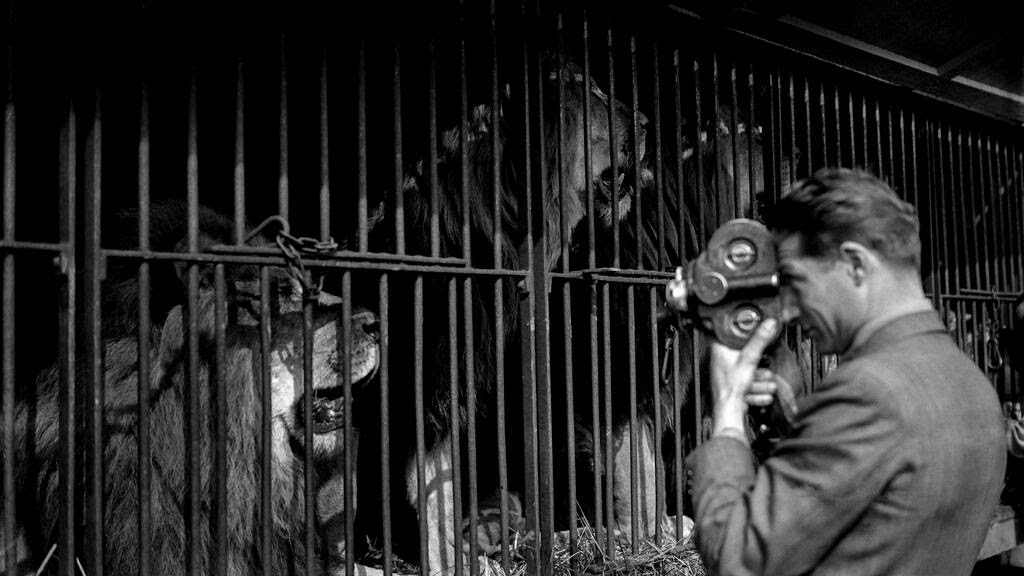
France bans wild animals in circuses

France24 – AFP, 18 November 2021 

Consigned to history: The new law will ban use of lions such as these of
the Amar Circus in 1946 Paris

Paris (AFP) – French lawmakers voted on Thursday to end wild animals being used in live circus shows, spelling an end to performing tigers, lions or bears. 

Performances of wild animals will be prohibited in two years and owning them outlawed in seven years, under the wide-ranging animal rights legislation that has been under debate since 2020. 

The law, once signed by President Emmanuel Macron, will also ban live dolphin shows in the next five years and immediately end mink farming, meaning the country's last operator will close. 

Macron's centrist Republic on the Move (LREM) party called the legislation "a historic step in the animal rights combat". 

Circus owners denounced it, while some environmentalists said it did not go far enough. 

The foundation of France's most famous animal advocate, veteran actress Brigitte Bardot, welcomed "a major advance for the animal rights cause in France". 

As well as the measures targeting circuses, the new law will raise the maximum penality for mistreating animals to up to five years in prison and a fine of 75,000 euros ($85,000), and will tighten restrictions on the sale of pets. 

Loïc Dombreval, the LREM co-sponsor of the law, conceded that other controversial issues had not been included within the scope of the legislation, which won cross-party support in both houses of parliament. 

"There will inevitably come a day when... we will debate sensitive issues such as hunting, such as bull-fighting, or some animal-rearing practices," said the lawmaker, who is also a veterinarian. 

'Arbitrary law'

Environmentalists had called for measures to improve the conditions inside industrialised animal farms, which will require "a change in our agricultural model", Senator Daniel Salmon said on Thursday. 

Issues such as hunting and bull-fighting are especially sensitive because they are staunchly defended by supporters in rural areas as long-standing cultural practices. 

Farms that make foie gras pate in France -- which force-feed birds such as geese and ducks to artificially bloat their livers -- have also long been targeted by campaigners. 

The 120 circus owners in France are likely to protest against the restrictions placed on their livelihoods and have warned that some animals might end up abandoned. 

"It's an arbitrary law because there are not mistreated animals in our circuses," William Kerwich, head of the circus animal trainers' union, told AFP. 

He said there would be a reaction from his members on Monday, and a legal appeal. 

The new legislation also bans the use of wild animals in television shows, nightclubs and private parties. 

Polls show that a vast majority of French people support the law, and dozens of cities and towns around the country have already banned travelling circuses that use animals. 

The changes will bring France into step with more than 20 European countries that have either banned or heavily restricted the use of animals for entertainment.

Monday, December 2, 2019

Rescued tigers leave Poland for Spain

Yahoo – AFP, December 1, 2019

The tigers (including Gogh pictured at the Poznan zoo) were found in late October
emaciated and dehydrated in the back of a truck taking them from Italy to a zoo
in Russia's Dagestan Republic (AFP Photo/Wojtek RADWANSKI)

Warsaw (AFP) - Five of nine tigers that narrowly survived a gruelling journey across Europe set off on Saturday for their new home at a Spanish animal refuge after weeks of recovery at a Polish zoo.

"The tigers have left. We're very happy that in just 24 to 30 hours they will arrive," said Malgorzata Chodyla, spokeswoman for the zoo in Poznan, western Poland.

Their destination is the Primadomus Wildlife Refuge in the southeastern Spanish town of Villena.

Chodyla said there was a brief scare, as two of the tigers did not want to sleep, despite the sedatives they were given.

"When the whole team has to enter the enclosure to carry out the tiger and it suddenly lifts its head up, those are some tense moments. But everything happened safely," she told AFP.

She added that the vehicle had heating and the tigers had enough room to switch positions.

In late October, Polish border authorities found 10 emaciated and dehydrated big cats in the back of a truck taking them from Italy to a zoo in Russia's Dagestan Republic.

Polish prosecutors charged two Italian truck drivers and a Russian man believed to have organised the journey with animal abuse after the truck got stuck for days on Poland's border with Belarus.

Prosecutors also charged a Polish border service veterinarian for failing to properly examine the tigers when they first arrived at the Koroszczyn crossing, where one of them died.

The surviving nine tigers were taken to two Polish zoos.

The Poznan zoo described them as "emaciated, dehydrated, with sunken eyes, excrement stuck to their fur, urine burns, in a total state of stress, without the will or desire to live" when they were first discovered.

According to animal rights organisations, there are only between 3,200 and 3,900 tigers in the wild worldwide.

Another 7,000 are held in captivity, mainly in Asia.

Saturday, July 27, 2019

Seven dead tigers found in car in Vietnam

Yahoo – AFP, July 26, 2019

Three Vietnamese men were arrested after police found seven dead tigers
in their car (AFP Photo/Nam GIANG)

Hanoi (AFP) - A haul of frozen tiger carcasses found in a car in Hanoi has led to the arrest of a key wildlife trafficking suspect, Vietnamese state media said Friday, as the country tries to tackle a well-worn smuggling route from Laos.

Nguyen Huu Hue, who is believed to have smuggled animals in from neighbouring Laos for years, was arrested Thursday with two other people after seven dead tigers were discovered in their vehicle at a parking lot, according to Cong An Nhan Dan newspaper.

"Hue set up a company... which sells building material as a cover for the illegal trading of tigers and wildlife," Cong An Nhan Dan, the official mouthpiece of the Ministry of Public Security, reported.

All seven tigers appeared to be cubs, according to photos of the seizure.

It was not immediately clear if the dead tigers had come from the wild or from the many illegal tiger farms in Laos, which supply much of Asia's demand for tiger meat and parts.

Police have previously busted several other members of the same wildlife trafficking ring, which has been running for several years from a central province which shares a border with Laos.

Vietnam is both a consumption hub and popular smuggling route for illegal wildlife -- from tigers to elephant tusks, pangolins and rhino horn.

Some of it is destined for domestic consumption in Vietnam, while the rest is smuggled on to China.

Tiger parts are used for traditional medicine or jewellery in Vietnam, where the once-large population of the endangered cats has dwindled dramatically.

Their bones are commonly boiled down and mixed with rice wine to make an elixir believed to treat arthritis and promote strength.

The smugglers' arrest in Hanoi follows a record seizure in Singapore this week of nearly nine tonnes of ivory and a huge stash of pangolin scales destined for Vietnam.

Hanoi has long vowed to crack down on the illegal wildlife trade, though conservationists say the black market persists thanks to weak law enforcement.

Thursday, September 27, 2018

Rare Sumatran tiger found dead in Indonesia

Yahoo – AFP, September 26, 2018

The carcass of a critically endangered Sumatran tiger which died after being
caught in a pig trap near Pekanbaru on the island of Sumatra (AFP Photo/Wahyudi)

Pekanbaru (Indonesia) (AFP) - A critically endangered Sumatran tiger has died after being caught in a hunter's trap on the Indonesian island of Sumatra, an official said Wednesday.

Locals told the conservation agency that a female Sumatran tiger had been seen on Tuesday caught in a pig trap set by a hunter in Muara Lembu village of Riau province.

Officers immediately visited the location but the tiger was gone.

The next day officers scoured the area once again and found the tiger dead near a ravine, with rope from the trap wrapped around its belly.

They believed the rope caused the animal's death.

Local conservation agency head Suharyono said the death was especially regrettable because the tiger was an adult female expected to give birth to cubs.

Sumatran tigers are considered critically endangered by the International Union for Conservation of Nature.

There are fewer than 400 Sumatran tigers left in the wild and environmental activists say they are increasingly coming into conflict with people as their natural habitat is rapidly deforested.


Saturday, September 15, 2018

Thursday, September 6, 2018

VIDEO: Three baby Bengal tigers, including one albino cub, born in May play at the Bengal Safari Park in India

Saturday, August 25, 2018

Caesar, the oldest lion in Amsterdam’s zoo roars his last

DutchNews, August 24, 2018

Photo: Ronald van Weeren via Artis

Caesar, the oldest lion in Artis zoo in Amsterdam, has roared his last, the zoo authorities announced on Thursday 

The lion, who lived in the zoo for 19 of his 20 years and was leader of the pride, had been ill for some time. On Thursday his condition worsened and zoo vets decided to put him down. 

Caesar had 21 descendants among whom two lionesses that still live in Artis zoo. 

The lion lived to a good age, Artis said. Lions in the wild don’t usually live longer than 10  to 14 years. 

‘He was very well-known to visitors who were impressed by his dark mane and piercing roar,’ Artis wrote. The zoo is now looking for a new pride leader.

Saturday, October 14, 2017

Two tigers rescued from Aleppo find new Dutch home

Yahoo – AFP, October 13, 2017

Four Paws: One of the tigers rescued from the destroyed Magic World
amusement park near Aleppo. (AFP Photo/Ahu Savan An)

The Hague (AFP) - Two tigers rescued from an abandoned zoo in the war-torn Syrian town of Aleppo are to be given a new home in a Dutch sanctuary, the animal refuge said Friday.

Brother and sister, Sultan and Sayeeda, will arrive Monday in The Netherlands after they were among 13 animals evacuated earlier this year from the "Magic World" zoo and amusement park in the ravaged Syrian city.

The Four Paws charity, which goes to the aid of animals in distress around the world, brought the tigers out of Syria and into Turkey at the end of July along with five lions, two bears, two hyenas and two dogs.

After a short stay in Turkey to be cared for and treated for neglect, the animals were taken to Jordan in mid-August. While most of the 13 beasts are staying there, Sultan and Sayeeda, who were badly emaciated and de-hydrated, are to be cared for at the Felida refuge in northern Nijeberkoop.

The felines, which will be housed in the sanctuary's quietest areas, will receive special medical treatment to help them get over the trauma of the war and develop a more natural behaviour.

They "were living in a war zone. They were thirsty and hungry. They could hear lots of noise from the bombings" and suffered a lot of stress as a result, said Simone Schuls, the director of the refuge.

"It's a great second chance for these animals," she said, adding the pair may eventually be rehoused elsewhere depending on their recovery.

In April in a tough mission in Iraq, Four Paws also rescued a lion and a bear, the last survivors of the ravaged zoo in Mosul.

Related Articles:

Thursday, September 7, 2017

Dutch give big cats hunting lessons in return to the wild

Yahoo – AFP, Sophie MIGNON, September 6, 2017

The hunting simulator is operated by a joystick and aims to return the big
cats to peak condition and ultimately, possibly, to the wild (AFP Photo)

Anna Paulowna (Netherlands) (AFP) - Suspended from a large butcher's hook, a prime piece of raw steak glides and then zigzags through the air in a big arena under the watchful eye of Dumi, the lioness.

With her hunter's instinct taking over, the big cat runs down her "prey" across the rocks and ponds of an artificial savannah at a lion sanctuary north of Amsterdam, then hooks her claws into her quarry after a spectacular leap.

Perhaps one day, thanks to this unique hunting simulator manipulated by a joystick, former circus performer Dumi will be able to hunt on African plains.

"It's a system which is meant to train the animals and not only give them back a little of their instinct, but also improve their motor control, their muscles, strength and reactions," said Daphne Pels, a keeper at the Stichting Leeuw (Lion Foundation) refuge.

There are 35 wild cats at the sanctuary in the small town of Anna Paulowna, some 80 kilometres (50 miles) north of Amsterdam.

Most have been born in captivity, and the foundation aims to get the big felines -- lions, tigers, cougars and leopards -- back into peak condition to improve their lives and ultimately, even to hunt in the wild.

The big cats train in an artificial savannah and are challenged according to
their physical condition, while some have become lazy in captivity (AFP Photo)

 'Dependent on humans'

The cats were mostly rescued from inexperienced and sometimes malicious private owners.

Some are survivors of circuses that used wild animal acts -- now partially or totally banned in some EU countries -- and find it too expensive to feed the rapacious carnivores that can devour up to six kilogrammes (13 pounds) of meat a day.

Like Omar. Used as a cub by a circus to attract tourists who could hug the baby lion for selfies, Omar was eventually sold to a Slovakian mafia boss, who kept him in his garden as a pet.

When the foundation rescued Omar in March 2015, the male lion suffered from advanced malnutrition and was basically just skin and bones, with no muscle, and covered in sores and faeces.

It took Omar two years to recover. He now sports a large fawn-coloured mane, but he bears a scar on his muzzle and his small, amber eyes remain vigilant and mistrustful.

"These are animals that depend on humans a lot because they were bottle-fed, born in the circus and declawed" by their tamers or owners, said Pels.

"We can't just put them back in the wild," she told AFP.

Established in 2011 by a passionate businessman, the Stichting Leeuw (Lion 
Foundation) refuge in The Netherlands is looking after 35 wild cats (AFP Photo)

Chasing prey

Now Sarabi, the lioness, and Ambra and Laxmi, two tigresses, regularly train in this "playground" of roughly 80 metres by 50 metres (262 feet by 164 feet), which took three years to build.

Prey can vary: sometimes it's a toy, sometimes a piece of meat and even, when there's no audience, a dead rabbit or pigeon to help rekindle their hunting instincts.

The cats' target is suspended a few feet up in the air and moved around in a random fashion by keepers using the joystick in a small control room. The aim is to push the cats, which have sometimes become lazy in captivity, to chase their prey.

The small, artificial savannah is dotted with obstacles such as rocks, pools and tree trunks "so the animals have to learn how to watch and run at the same time," Pels said.

"The first few times we see them maybe bump their noses or accidentally fall into the water," she said laughing.

Training is adapted to each individual depending on its physical condition, age and needs.

"We are able to give the animals some training (too), but it's natural training. They don't have to jump through a hoop."

A puma, as well as lions, tigers, cougars and leopards, are among the big 
felines at the foundation and most were born in captivity (AFP Photo)

Back to Africa

Established in 2011 by a passionate businessman and financed through private donations, the foundation hopes to relocate Omar back to Africa this year "to give him a family."

Relocation costs 25,000 euros ($29,700).

Now aged five, Omar will join five other lions already living at the Emoya sanctuary in the Bahati wildlife estate in northern South Africa. Two Bengal tigers are also expected to join the Wildlife Friends Foundation of Thailand (WFFT).

Once in their new homes, the felines have to learn to adapt. Those too dependent on humans will live in a small one- to two-acre area of savannah.

Others move on to the next stage, living in an enclosure of 50 to 100 hectares learning to hunt for real.

But it's a long-term project.

"We have to start with small prey and have to observe whether they will develop skills" to be able to feed themselves before introducing larger animals, Pels said.

"For now the most important thing is to bring the animals to Emoya to upgrade their lives and free up space for new animals that need help," Pels added.

This includes elephants, which the foundation hopes to take in in the future.


Sunday, July 23, 2017

Researchers mourn killing of Cecil the lion's cub

Yahoo – AFP, July 21, 2017

Cecil was killed by American dentist and trophy hunter Walter Palmer. Researchers
now confirm that a trophy hunter has shot dead one of his cubs (AFP Photo)

Johannesburg (AFP) - A trophy hunter in Zimbabwe has shot dead a cub of Cecil the lion whose death in 2015 caused worldwide outrage, researchers tracking the pride confirmed Friday.

Xanda, a six-year-old lion fitted with a radio collar, was killed on July 7 in northwest Zimbabwe, close to where US dentist Walter Palmer shot Cecil with a high-powered bow and arrow two years ago.

"Xanda was shot by a trophy hunter on a legally sanctioned hunt in a hunting area outside Hwange National Park," Andrew Loveridge from Oxford University's zoology department told AFP.

"As researchers we are saddened to lose a well-known study animal we have monitored since birth."

In 2015, Cecil's killing triggered fierce controversy as he was a popular attraction for visitors to the famed Hwange National Park.

Both Cecil and Xanda wore electronic GPS tracking collars in a project run by Oxford University's wildlife conservation research unit.

But they had strayed out of the park boundaries and into a legal hunting area.

The trophy hunter has not been named, but many hunters are from the United States or South Africa, paying tens of thousands of dollars for the opportunity to kill lions and other wild animals.

Pro-hunt groups say hunting provides an essential economic incentive to promote long-term conservation and that the income pays to safeguard wildlife and catch poachers.

Britain's Daily Telegraph newspaper named the hunt's professional expedition leader as Zimbabwean Richard Cooke, and said that the hunt was legal as Xanda was six years old.

It added that Cooke had handed in the collar after discovering it on the dead animal, who was the head of the pride with two lionesses and several cubs.

Palmer, who shot Cecil, a 13-year-old male, was hounded on social media and went into hiding after demonstrations outside his dental practice.

He was reported to have paid $55,000 for the hunt.

No charges were brought against Palmer or the local guide as the hunt was also found to be legal.

Scientists, who say that Hwange has a healthy population of about 550 lions, are pushing for a 5-km (3-mile) hunting exclusion zone to protect lions who wander outside the park's boundaries.

Cecil had at least 12 surviving cubs last year, according to the Oxford research project.

Related Articles:

Hunt: Fahd bin Sultan is said to have killed
1,977 houbara bustards in just 21 days while
on holiday


Spain's King Juan Carlos poses in front of a dead elephant
on a hunting trip in Botswana, Africa. Photograph: Target
Press/Barcroft Media


Spain's king ousted as WWF honorary president
Spain's King Juan Carlos under fire over elephant hunting trip


Question: Dear Kryon: I live in Spain. I am sorry if I will ask you a question you might have already answered, but the translations of your books are very slow and I might not have gathered all information you have already given. I am quite concerned about abandoned animals. It seems that many people buy animals for their children and as soon as they grow, they set them out somewhere. Recently I had the occasion to see a small kitten in the middle of the street. I did not immediately react, since I could have stopped and taken it, without getting out of the car. So, I went on and at the first occasion I could turn, I went back to see if I could take the kitten, but it was to late, somebody had already killed it. This happened some month ago, but I still feel very sorry for that kitten. I just would like to know, what kind of entity are these animals and how does this fit in our world. Are these entities which choose this kind of life, like we do choose our kind of Human life? I see so many abandoned animals and every time I see one, my heart aches... I would like to know more about them.

Answer: Dear one, indeed the answer has been given, but let us give it again so you all understand. Animals are here on earth for three (3) reasons.

(1) The balance of biological life. . . the circle of energy that is needed for you to exist in what you call "nature."

(2) To be harvested. Yes, it's true. Many exist for your sustenance, and this is appropriate. It is a harmony between Human and animal, and always has. Remember the buffalo that willingly came into the indigenous tribes to be sacrificed when called? These are stories that you should examine again. The inappropriateness of today's culture is how these precious creatures are treated. Did you know that if there was an honoring ceremony at their death, they would nourish you better? Did you know that there is ceremony that could benefit all of humanity in this way. Perhaps it's time you saw it.

(3) To be loved and to love. For many cultures, animals serve as surrogate children, loved and taken care of. It gives Humans a chance to show compassion when they need it, and to have unconditional love when they need it. This is extremely important to many, and provides balance and centering for many.

Do animals know all this? At a basic level, they do. Not in the way you "know," but in a cellular awareness they understand that they are here in service to planet earth. If you honor them in all three instances, then balance will be the result. Your feelings about their treatment is important. Temper your reactions with the spiritual logic of their appropriateness and their service to humanity. Honor them in all three cases.

Sunday, July 16, 2017

Wild lion caught on camera nursing leopard cub

A lion has been photographed nursing a leopard cub in the first-ever known case of cross-species suckling among wild cats. The two species are normally mortal enemies.

Deutsche Welle, 15 July 2017


The photographs were taken at Tanzania's Ngorongoro Conservation Area earlier this week and published by the wild cat conservation group Panthera.

The images show a five-year-old lioness named "Nosikitok" suckling a leopard cub estimated to be only three weeks old.

The organization said same-species adoption among wild cats has been known to occur, but cross-species suckling had never been observed before.

"This is a truly unique case," said Panthera President and Chief Conservation Officer Luke Hunter. "I know of no other example of inter-species adoption or nursing like this among big cats in the wild."

It is unclear what motivated the lioness to nuture the stranded leopard cub.

"Nosikitok" is radio-collared and monitored by KopeLion, a Tanzanian conservation NGO supported by Panthera that works with the local Maasai community to protect lions.


The lioness is known to have given birth to her own cubs recently, making her "physiologically primed" to care for cubs, according to Hunter. The leopard cub is believed to be the same age and a similar size to the lioness's own cubs.


Hunter said "Nosikitok" would be "awash with a ferocious maternal drive" but it is still mystifying why she would suckle the cub of another species.

"It is quite possible she has lost her own cubs, and found the leopard cub in her bereaved state when she would be particularly vulnerable," he said.

The photographs were taken on Tuesday and since then "Nosikitok" has returned to her pride. It is unknown what happened to the leopard cub.

Hunter said it is possible that the leopard's mother picked up the cub from "lioness day care."

However, he said that if the cub was not under the care of its mother its chances of survival were very low.

"The natural odds are stacked against this little fellow," Hunter said, pointing out that 40 percent of lion cubs don't make it to adulthood in the Ngorongoro Conservation Area.

The fate of the leopard cub is unknown.

"It is very unlikely that the lioness's pride will accept it," he said. "Lions have very rich, complicated social relationships in which they recognize individuals - by sight and by roars - and so they are very well equipped to distinguish their cubs from others. If the rest of the pride finds the cub, it is likely it would be killed."

Hunter said that even if the leopard cub managed to survive with a lion pride until it became independent after 12 to 18 months, it would likely go out on its own.

"Even its early exposure to lion society would not override the millions of years of evolution that has equipped the leopard to be a supreme solitary hunter," he said. "I am sure it would go its own way."

cw/ng (dpa, Reuters)

Saturday, March 18, 2017

Wallaby escapes at Dutch zoo and gets eaten by a lion

DutchNews, March 17, 2017

The lion makes off with its prey. Photo: Luciën Olinga via Facebook 

A wallaby which escaped from its enclosure at the Wildlands zoo in Emmen on Thursday met an unfortunate end after it hopped into the lions den. 

The wallaby, one of a group of four at the zoo, was captured by a lioness, killed and apparently eaten. The zoo was open at the time and visitor Luciën Olinga caught part of the incident on camera. 

The other three wallabies have been locked up to keep them calm while staff make sure that they are unable to escape in future, the zoo said in a statement.

Thursday, June 2, 2016

Dozens of dead cubs found at Thai tiger temple

Yahoo – AFP, Thanaporn Promyamyai, June 1, 2016

Thai wildlife officials use a tunnel of cages to capture a tiger at the Wat Pha
 Luang Ta Bua "tiger temple" in Kanchanaburi province, western Thailand, on
May 30, 2016 (AFP Photo/Christophe Archambault)

Bangkok (AFP) - Thai wildlife officials have discovered dozens of dead cubs inside a freezer at a controversial "tiger temple" that has been locked in a long-running dispute with authorities and animal rights groups, police said Wednesday.

Wildlife officials found the tiger cubs during a continuing operation to remove dozens of adult cats from the Wat Pha Luang Ta Bua temple in the western province of Kanchanaburi.

"We found 40 tiger cubs today. They were aged about one or two days when they died but we don't quite know yet how long they have been dead," police colonel Bandith Meungsukhum, a local officer, told AFP.

A warden hugs a tiger at the "tiger
 temple" in Thailand's Kanchanaburi 
province on April 24, 2015 (AFP Photo/
Nicolas Asfouri)
Adisorn Noochdumrong, the deputy head of Thailand's parks department, said they would file charges against the temple for keeping the carcasses without permission.

"A keeper said he was told to place the carcasses when they died in cold storage," he told AFP.

The temple has long proved a hit among mainly foreign visitors who flock there to be photographed -- for a fee -- next to the scores of exotic feline pets.

Wildlife officials say the whole complex is illegal and have battled the monks for years to try and close it down. The dispute has been complicated by the fact that secular Thai authorities are often reluctant to intervene in the affairs of the clergy.

This week officials were granted a court order to seize the cats and have so far removed around 45 adults.

Animals rights groups and conservationists have accused the temple of complicity in the hugely lucrative black-market wildlife trade, making tens of thousands of dollars by selling off older cats and animal parts for use in Chinese medicine.

Last year one of the temple vets turned whistleblower, handing authorities three microchips he said were inside a trio of tigers who had disappeared. It has never been fully established what happened to those tigers.

Dead tiger cubs are displayed by Thai officials after they were found during a 
raid on the controversial Tiger Temple, a popular tourist destination which has come
 under fire in recent years over the welfare of its big cats, in Kanchanaburi province,
west of Bangkok, Thailand June 1, 2016. Daily News/via Reuters

'Preserved and frozen'

Wildlife officials have also discovered during previous raids dozens of hornbills, jackals and Asian bears that were being kept at the sanctuary without permits.

The temple has always denied trafficking allegations.

In a statement posted on its Facebook page, the temple said it was common for cubs to be stillborn or die shortly after birth.

The temple said it used to cremate dead cubs but the policy was changed in 2010.

"Instead of cremation, the deceased cubs were preserved in jars or kept frozen," the statement added, without elaborating on why the policy was changed.

The temple also denied selling cubs, saying such rumours were from people who have "jumped to conclusions".

A Buddhist monk walks past a tiger before officials start moving them from 
Thailand's controversial Tiger Temple, a popular tourist destination which has come
 under fire in recent years over the welfare of its big cats in Kanchanaburi province, 
west of Bangkok, Thailand, May 30, 2016. Reuters/Chaiwat Subprasom

Photographs from the scene on Wednesday showed the cubs laid out on a blanket alongside the body of a bearcat, some deer horns and nearly two dozen containers.

Thai newspaper Khaosod, which had a reporter at the scene, said the containers had animal parts and intestines inside them.

Edwin Wiek, a Thailand-based conservationist who has campaigned for the temple's closure and whose veterinary staff have accompanied wildlife officials this week in the operation to remove the cats, said the cubs might have been kept to make religious charms.

"The key thing is these tigers are illegal under Thai law," he said.

Moves to confront the monks and confiscate the tigers have been staggered over recent months. There are now believed to be around 100 tigers remaining at the temple.

For years the government has been seemingly powerless to resolve the issue, partly for fear of being seen to confront the clergy and also because officials readily admit they have nowhere else to put such a large number of tigers.