Robber fly - Nature photographer Thomas Shahan specializes in amazing portraits of tiny insects. It isn't easy. Shahan says that this Robber Fly (Holcocephala fusca), for instance, is "skittish" and doesn't like its picture taken.

Nature by Numbers (Video)

"The Greater Akashic System" – July 15, 2012 (Kryon Channelling by Lee Caroll) (Subjects: Lightworkers, Intent, To meet God, Past lives, Universe/Galaxy, Earth, Pleiadians, Souls Reincarnate, Invention: Measure Quantum state in 3D, Recalibrates, Multi-Dimensional/Divine, Akashic System to change to new system, Before religion changed the system, DNA, Old system react to Karma, New system react to intent now for next life, Animals (around humans) reincarnate again, This Animal want to come back to the same human, Akashic Inheritance, Reincarnate as Family, Other Planets, Global Unity … etc.)

Question: Dear Kryon: I live in Spain. I am sorry if I will ask you a question you might have already answered, but the translations of your books are very slow and I might not have gathered all information you have already given. I am quite concerned about abandoned animals. It seems that many people buy animals for their children and as soon as they grow, they set them out somewhere. Recently I had the occasion to see a small kitten in the middle of the street. I did not immediately react, since I could have stopped and taken it, without getting out of the car. So, I went on and at the first occasion I could turn, I went back to see if I could take the kitten, but it was to late, somebody had already killed it. This happened some month ago, but I still feel very sorry for that kitten. I just would like to know, what kind of entity are these animals and how does this fit in our world. Are these entities which choose this kind of life, like we do choose our kind of Human life? I see so many abandoned animals and every time I see one, my heart aches... I would like to know more about them.

Answer: Dear one, indeed the answer has been given, but let us give it again so you all understand. Animals are here on earth for three (3) reasons.

(1) The balance of biological life. . . the circle of energy that is needed for you to exist in what you call "nature."

(2) To be harvested. Yes, it's true. Many exist for your sustenance, and this is appropriate. It is a harmony between Human and animal, and always has. Remember the buffalo that willingly came into the indigenous tribes to be sacrificed when called? These are stories that you should examine again. The inappropriateness of today's culture is how these precious creatures are treated. Did you know that if there was an honoring ceremony at their death, they would nourish you better? Did you know that there is ceremony that could benefit all of humanity in this way. Perhaps it's time you saw it.

(3) To be loved and to love. For many cultures, animals serve as surrogate children, loved and taken care of. It gives Humans a chance to show compassion when they need it, and to have unconditional love when they need it. This is extremely important to many, and provides balance and centering for many.

Do animals know all this? At a basic level, they do. Not in the way you "know," but in a cellular awareness they understand that they are here in service to planet earth. If you honor them in all three instances, then balance will be the result. Your feelings about their treatment is important. Temper your reactions with the spiritual logic of their appropriateness and their service to humanity. Honor them in all three cases.

Dian Fossey's birthday celebrated with a Google doodle

Dian Fossey's birthday celebrated with a Google doodle
American zoologist played by Sigourney Weaver in the film Gorillas in the Mist would have been 82 on Thursday (16 January 2014)
Showing posts with label Fur. Show all posts

Friday, December 3, 2021

Elle says will drop fur from magazines worldwide

 Yahoo – AFP, Anna CUENCA, December 2, 2021
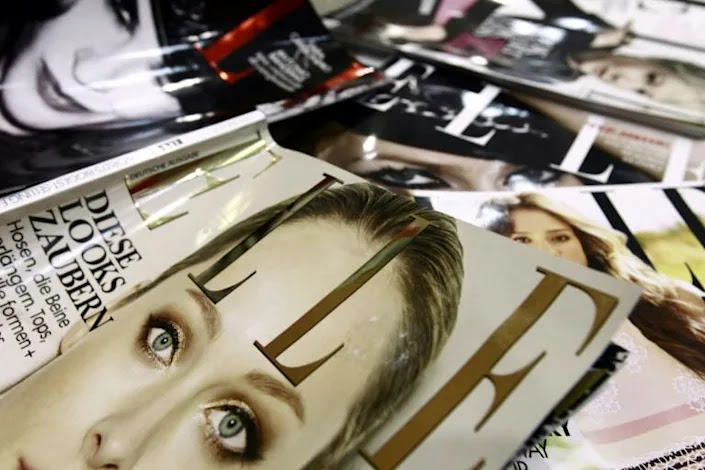
Elle will soon be fur-free in terms of both editorial content and advertising
(AFP/JOEL SAGET)

Elle magazine announced on Thursday it will stop using fur in all its editorial and advertising content worldwide, becoming the first major publication to do so. 

The monthly lifestyle magazine, which originated in France and is owned by French media group Lagardere, comes out in 45 different editions around the world. 

It has about 33 million readers from Mexico to Japan, with 100 million monthly online visitors. 

But Elle's international director Valeria Bessolo Llopiz told an annual two-day fashion industry conference starting on Thursday in Britain that fur was no longer acceptable. 

"The presence of animal fur in our pages and on our digital media is no longer in line with our values, nor our readers," she said. 

"It is time for Elle to make a statement... rejecting animal cruelty," Bessolo Llopiz told delegates at The Business of Fashion Voices 2021 event in Chipping Norton, in Oxfordshire, southern England. 

Instead, she said the magazine wanted to "increase awareness for animal welfare" and "foster a more humane fashion industry". 

The magazine has already dropped fur from 13 of its editions. Twenty more will drop fur from January 1, 2022 and the rest will start a year later. 

'Old-fashioned' 

The move reflects the changing nature of consumer demand, Bessolo Llopiz told AFP. 

"Fur has become old-fashioned," she said, noting many brands had gone "fur-free" years ago. 

"We are in a new era and the Gen Z (born in the late 1990s to early 2010s), which is the golden target for fashion and luxury, has huge expectations in terms of sustainability and ethics," she added. 

Welcoming Elle's decision, PJ Smith, director of fashion policy for the Humane Society of the United States, said he looked forward to other fashion magazines following suit. 

"This announcement will ignite positive change throughout the entire fashion industry and has the potential to save countless animals from a life of suffering and a cruel death," he told the conference. 

"Fur promotions belong only in the back copies of fashion magazines from days gone by," Elisa Allen, the UK director of animal rights organisation PETA, told AFP. 

She welcomed decisions by publications -- including British Vogue, InStyle USA, Cosmopolitan UK, and the newly launched Vogue Scandinavia -- rejecting fur on their editorial pages and expects the move to soon extend to advertising. 

Consumer pressure 

The decision comes as the fashion industry has faced pressure from animal rights activists to stop the use of real fur on humane grounds and mounting public opposition. 

Smaller fashion weeks held in cities such as Amsterdam, Oslo, Melbourne and Helsinki have all banned fur but larger ones in Paris, Milan and New York leave it up to designers. 

Many big names have already chosen to no longer use fur. 

They include Gucci, Versace and Prada, Burberry, Vivienne Westwood and Alexander McQueen, Donna Karan, DKNY and Michael Kors, as well as Jean-Paul Gaultier and Balenciaga. 

A 2020 YouGov survey found that 93 percent of British people refuse to wear natural fur while another by Research Co suggested that in the US, 71 percent opposed killing animals for their fur. 

In Europe, an FOP poll indicated that 90 percent of French opposed the fur trade, while 86 percent of Italians expressed opposition in a 2019 survey by Eurispes. 

In a German poll by Kantar in 2020, 84 percent said cruelty towards animals and killing them for their fur was unacceptable. 

Israel in June became the world's first country to ban selling fur to the fashion industry. 

The fur industry itself argues that its natural product is being replaced with synthetic fur made with plastics that damage the environment. 

The French fur industry federation said in a statement on Thursday evening that it would "consider suing" the magazine's platform for "refusing to sell". The fur industry believes that the decisions of designers and consumers are being forced by "pressure from radical movements". 

While fake fur coats are often made from polyester, which takes hundreds of years to biodegrade, some designers such as Britain's Stella McCartney opt for plant-based materials. 

Others use natural fibres such as wool and feathers to mimic the appearance of fur.

Thursday, May 20, 2021

Valentino joins growing band of fur-free designers

Yahoo – AFP, May 19, 2021, Rudolph Valentino 

Valentino's decision follows a growing number of big fashion names
renouncing the use of animal fur
 

Valentino has became the latest fashion powerhouse to abandon real fur, in a move welcomed on Wednesday by Italian campaigners as a "nail in the coffin for the cruel fur trade". 

The iconic Italian house said it would cease production at its Milan-based fur company, Valentino Polar, at the end of this year and the last collection to include fur will be the fall/winter 2021-22 season. 

"The fur-free stance is perfectly in line with the values of our company," said Jacopo Venturini, CEO of Valentino, in a statement. 

"We are moving full-steam ahead in the research for alternative materials in view of a greater attention to the environment for the upcoming collections." 

The decision follows a growing number of big fashion names renouncing the use of animal fur, including Armani, Prada and Gucci. 

Martina Pluda, Italy director for campaign group Humane Society International, said Valentino's decision "is a major nail in the coffin for the cruel fur trade". 

"Like so many other designers, Valentino knows that using fur makes brands look outdated and out of touch, and fur industry certification schemes are little more than the hollow PR spin of an industry that kills 100 million animals for fur a year," she said.

Saturday, August 29, 2020

Mink farmers to shut up shop next year, reported compensation deal worth €180m

DutchNews, August 28, 2020 

Mink on a fur farm. Photo: Dzīvnieku brīvība via Flickr 

The government has decided to bring forward the closure of the Dutch mink fur industry from 2024 to next March, following outbreaks of coronavirus on at least 41 of the country’s 110 fur farms. 

Fur farmers begin killing young mink for their fur in November and have been told by farm minister Carola Schouten that they must shut up shop before the next breeding season in 2021, broadcaster NOS has reported. 

The mink on all 41 farms where coronavirus has been found – well over 160,000 – have already been killed. Before coronvirus hit, there were some 700,000 young mink on fur farms in the Netherlands, national statistics agency CBS said last week. 

There had been calls from some quarters to close down the industry immediately because of the risk coronavirus is spread to humans and because pockets of infection could remain. 

However, government health experts have said the risk to human health is not serious enough to merit such a move, NOS said. 

Sources suggest the government has come up with a €180m compensation package to offset the financial impact of early closure. Of this €40m is to pay for the cull and the rest will go to the farmers who have lost their income. 

Schouten is expected to go public with her plan after discussing it with the cabinet on Friday morning.

Tuesday, June 9, 2020

Mink farm clearances deal final blow to a dying industry: Volkskrant

DutchNews, June 8, 2020 

Photo: Peta.nl

As mink farm clearances continue in the wake of high levels of COVID-19 infection among the animals, the Volkskrant took a look at a dying industry. 

The Netherlands is home to some 128 mink farms concentrated in the south of the country, making it the third largest producer of mink pelts in the world after Denmark and China. 

The use of fur and the conditions the animals were kept had prompted calls to ban the industry since 1989 but didn’t result in a law prohibiting the practice until 2013. At the time, fur farmers were told they would get until the end of 2023 to make good on their investments. 

The impact of the impending ban on some farmers was such that a number of them committed suicide, the paper writes. But for some the fur trade – most of it is exported to China, Russia and Japan, and in Europe to Italy and Greece – has been a lucrative business. 

The biggest earner is Jos van Deurzen from Elsendorp who became a multimillionaire with an estimated fortune of €89m. Van Deurzen has at least ten fur farms in the Netherlands and abroad and also owns factories making mink feed and cages. 

Apart from the blow dealt to the industry by COVID-19, fur farmers had been struggling anyway, the paper says. Overproduction in the last few years has caused the market for fur to collapse and instead of €70 for a pelt the price has now halved. 

In September last year the sector came under the scrutiny of the tax office for suspected tax fraud and money laundering. Over €50m of revenue was thought to have been channelled out of sight via accounts in Luxembourg. 

It is not known whether the fur farmers will be compensated for the mink which have been gassed because of Covid-19 or whether farms will be allowed to start up again once the virus has disappeared, the Volkskrant said.

Thursday, June 4, 2020

Thousands of mink on Dutch fur farms to be culled to clear coronavirus risk

DutchNews, June 3, 2020

Photo: Peta.nl 

Thousands of mink living on eight fur farms where coronavirus has been found are to be gassed, government sources have told website Nu.nl and RTL Nieuws. 

The eight farms, operated by six different companies, are all in Noord-Brabant province, which is at the centre of the Dutch fur farming industry. 

Officials have decided the farms should be cleared for public health reasons, Nu.nl said. At least two farm worker has been infected with coronavirus via the animals. 

The Netherlands is due to have phased out fur farming by 2024. In 2016, the Netherlands had some 160 fur farms producing five million pelts a year and the country was the third biggest fur farming nation in the world behind Denmark and China. 

The government is due to make a formal announcement later on Wednesday.

Related Articles:

Wednesday, December 5, 2018

Chanel sheds crocodile and snake skin

Yahoo –AFP, Fiachra GIBBONS, 4 December 2018

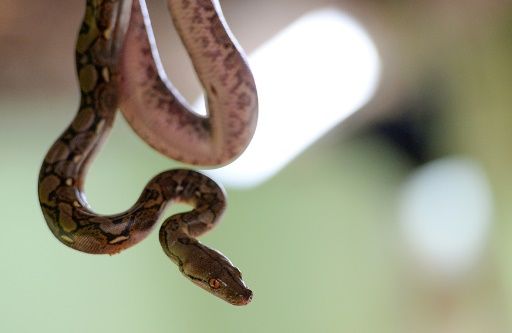
Chanel has made the world a little safer for snakes

Chanel has become the first luxury fashion house to turn its back on exotic animal pelts such as lizard, crocodile and snake skin, in a move hailed by animal rights groups Tuesday.

Its head of fashion Bruno Pavlovsky declared that it "would no longer use exotic skins in our future creations", saying it was becoming more difficult to source high-quality pelts ethically.

Handbags, coats and shoes made from snake, alligator and stingray skin command premium prices, with Chanel handbags made from them reportedly selling for up to 9,000 euros ($10,300).

Python skin bags were removed from Chanel's website Tuesday, although secondhand bags were still on sale from more than 5,500 euros from online resale sites.

Animals rights groups cheered the move, with the PETA and the Humane Society International (HSI) claiming that the iconic house founded by Coco Chanel was also renouncing the use of fur.

But in a statement Chanel did not mention fur, saying it would no longer use crocodile, lizard, snake and stingray to make coats, bags and shoes.

Its veteran designer Karl Lagerfeld had earlier told the industry bible Women's Wear Daily that Chanel used fur so rarely that he could not remember the last time it featured on the catwalk.

He said the brand had chosen to drop exotic skins rather than having it "imposed on us. We did it because it's in the air.

"It's a free choice," he added.

'Ethical fashion'

Animal rights groups hailed Chanel as giving a lead to other luxury brands.

By turning its back on exotic skins, "Chanel is saving countless crocodiles, lizards, snakes and stingrays from suffering," said HSI director Claire Bass.

"The growth in fabulous luxury and eco-friendly fibres that don't involve animals suffering and dying is helping to drive forward this new era of ethical fashion.

"Fur-using brands such as Fendi (for which Lagerfeld also designs), Dolce & Gabbana and Louis Vuitton need to take heed and embrace this fur-free future," she added.

PETA also piled the pressure on Vuitton, which is owned by fashion giant LVMH.

"It's clear that the time is now for all companies, like Louis Vuitton, to follow Chanel's lead and move to innovative materials that spare countless animals a miserable life and a violent, painful death," it said.

Although top fashion brands have been under heavy pressure to renounce fur, with Gucci, Armani, Versace and John Galliano all deciding to go fur free, Chanel's decision to stop using exotic skins came out of the blue.

It said that it was now concentrating on developing a new generation of "ultra luxurious" products to replace them from its famous design studios.

Animal rights campaigns against the use of crocodile and snake skin products have not got the same traction with the public as similar crusades against fur, with some luxury brands even investing in reptile farms so they can guarantee that skins are sourced ethically.

Chanel has made the world a little safer for snakes

Related Article:


Saturday, December 17, 2016

Dutch Supreme Court upholds ban on fur farming

DutchNews, December 16, 2016

The Dutch Supreme Court has rejected a claim from fur farmers that the pending ban on fur farming conflicts with their human rights. 

The ban on fur farming was introduced in the Netherlands in 2013 and included an 11-year changeover period. In 2014 a lower court found in favour of fur farmers who are furious at being ordered to shut down their companies without compensation.

The state appealed against that ruling and last year the appeal court said the new legislation does take the interest of fur farmers sufficiently into account because of the 11-year changeover period. 

Fur farmers then took their case to the Supreme Court which has now upheld the ban again. ‘There is a balance between the fundamental rights of mink farmers and the general interest which is served by the new law,’ the court said in its ruling. 

The Netherlands has some 160 fur farms producing five million pelts a year. The sector employs some 1,400 people. The Netherlands is the third biggest fur farming nation in the world behind Denmark and China.

Related Articles:


Tuesday, September 20, 2016

Dutch fur farm ban must go back to court, advocate general says

DutchNews, September 19, 2016

A legal case in which the Dutch fur farmers association took on the state to have an impending ban overturned must be heard again, the advocate general said on Monday. 

The appeal court which upheld the ban on fur farming last year did not take the financial impact on individual fur farmers sufficiently into account, Paul Vlas said in his recommendations. The advice of the advocate general is not binding but generally accepted by the Supreme Court. 

The ban on fur farming was introduced in the Netherlands in 2013 and included an 11-year changeover period. In 2014 a lower court  found in favour of fur farmers who are furious at being ordered to shut down their companies without compensation. 

The state appealed against that ruling and last year the appeal court said the new legislation does take the interest of fur farmers sufficiently into account because of the 11-year changeover period.

Financial damage

However, the advocate general said on Monday the appeal court ‘wrongly limited its reasoning to the question of whether the changeover period would limit the damage to fur farmers in general’. 

The Supreme Court will publish its ruling in December. 

The Netherlands has some 160 fur farms producing five million pelts a year. The sector employs some 1,400 people. The Netherlands is the third biggest fur farming nation in the world behind Denmark and China.

Related Article:


Wednesday, November 11, 2015

Dutch appeal court upholds fur farming ban

DutchNews, November 10, 2015

Photo: Romoro via Depositphotos.com
The ban on fur farming introduced in the Netherlands in 2013 has been upheld by the appeal court in The Hague. 

A lower court last year found in favour of fur farmers who are furious at being ordered to shut down their companies without compensation. The appeal court, however, said on Tuesday that the new legislation does take the interest of fur farmers sufficiently into account because of the 11 year changeover period. 

Fur farmers said in a reaction to Tuesday’s ruling that they will take the issue to the high court. ‘We have already said that we will pursue this case to the bitter end,’ a spokesman for the fur farmers association NFE told news agency ANP.

 ‘We are extremely puzzled as to why last year the court found in our favour and now opinions have changed. This is both a surprise and a disappointment, because we had not expected it,’ the spokesman said.

The ban on fur farming came into effect on January 15, 2013 and included an 11-year transition for existing companies. 

The Netherlands has some 160 fur farms producing five million pelts a year. The sector employs some 1,400 people. The Netherlands is the third biggest fur farming nation in the world behind Denmark and China.