Robber fly - Nature photographer Thomas Shahan specializes in amazing portraits of tiny insects. It isn't easy. Shahan says that this Robber Fly (Holcocephala fusca), for instance, is "skittish" and doesn't like its picture taken.

Nature by Numbers (Video)

"The Greater Akashic System" – July 15, 2012 (Kryon Channelling by Lee Caroll) (Subjects: Lightworkers, Intent, To meet God, Past lives, Universe/Galaxy, Earth, Pleiadians, Souls Reincarnate, Invention: Measure Quantum state in 3D, Recalibrates, Multi-Dimensional/Divine, Akashic System to change to new system, Before religion changed the system, DNA, Old system react to Karma, New system react to intent now for next life, Animals (around humans) reincarnate again, This Animal want to come back to the same human, Akashic Inheritance, Reincarnate as Family, Other Planets, Global Unity … etc.)

Question: Dear Kryon: I live in Spain. I am sorry if I will ask you a question you might have already answered, but the translations of your books are very slow and I might not have gathered all information you have already given. I am quite concerned about abandoned animals. It seems that many people buy animals for their children and as soon as they grow, they set them out somewhere. Recently I had the occasion to see a small kitten in the middle of the street. I did not immediately react, since I could have stopped and taken it, without getting out of the car. So, I went on and at the first occasion I could turn, I went back to see if I could take the kitten, but it was to late, somebody had already killed it. This happened some month ago, but I still feel very sorry for that kitten. I just would like to know, what kind of entity are these animals and how does this fit in our world. Are these entities which choose this kind of life, like we do choose our kind of Human life? I see so many abandoned animals and every time I see one, my heart aches... I would like to know more about them.

Answer: Dear one, indeed the answer has been given, but let us give it again so you all understand. Animals are here on earth for three (3) reasons.

(1) The balance of biological life. . . the circle of energy that is needed for you to exist in what you call "nature."

(2) To be harvested. Yes, it's true. Many exist for your sustenance, and this is appropriate. It is a harmony between Human and animal, and always has. Remember the buffalo that willingly came into the indigenous tribes to be sacrificed when called? These are stories that you should examine again. The inappropriateness of today's culture is how these precious creatures are treated. Did you know that if there was an honoring ceremony at their death, they would nourish you better? Did you know that there is ceremony that could benefit all of humanity in this way. Perhaps it's time you saw it.

(3) To be loved and to love. For many cultures, animals serve as surrogate children, loved and taken care of. It gives Humans a chance to show compassion when they need it, and to have unconditional love when they need it. This is extremely important to many, and provides balance and centering for many.

Do animals know all this? At a basic level, they do. Not in the way you "know," but in a cellular awareness they understand that they are here in service to planet earth. If you honor them in all three instances, then balance will be the result. Your feelings about their treatment is important. Temper your reactions with the spiritual logic of their appropriateness and their service to humanity. Honor them in all three cases.

Dian Fossey's birthday celebrated with a Google doodle

Dian Fossey's birthday celebrated with a Google doodle
American zoologist played by Sigourney Weaver in the film Gorillas in the Mist would have been 82 on Thursday (16 January 2014)

Wednesday, February 20, 2019

Female wolf settles in the Netherlands and may have a mate

DutchNews, February 19, 2019

A gray wolf. Photo: Depositphotos.com

A female wolf which has been roaming the northern part of the Veluwe national park in Gelderland can now be considered to be the first wolf to be officially settled there and off-spring may be on the way, wolf monitoring organisation Wolven in Nederland claims. 

A wolf is considered settled when it stays in a certain area for longer than six months. DNA in the wolf droppings, show that this is the case for Veluwe wolf GW998F, the organisation said, while droppings from a male wolf and tracks in the snow from both animals suggest that the female has found a mate. 

‘It is the start of the breeding season and if young wolves are born in May this could be the start of a pack,’ a Wolven in Nederland spokesperson told NOS

The return of the wolf, which became extinct in the Netherlands some 150 years ago, means a plan agreed on by a number of provinces that have been visited by wolves will be put into action. Under the scheme farmers who lose livestock to wolves will be automatically compensated for the next three years. The animals are protected and can only be shot under very exceptional circumstances. 

Wolven in Nederland said the fact that the wolves settle means they will be less dangerous to livestock. 

‘A roaming wolf will pick off a sheep for a quick snack but a settled wolf stays out of sight. It will go for boar and deer and won’t show himself near houses. It is very unlikely to cross paths with humans,’ spokesman Maurice Lahaye told the broadcaster. 

The settled wolf comes from a pack in Germany where wolves have been proliferating in recent years. In Schleswig- Holstein the authorities recently allowed a ‘problem wolf’ which had been killing sheep to be shot.

Thursday, February 14, 2019

Rescue of 200 dogs destined for slaughterhouse begins in South Korea

Yahoo – News, 13 February 2019

The animal protection group Humane Society International saved about 200 dogs
at a dog farm in Hongseong, 150 kilometres south of Seoul

A rescue operation to save hundreds of dogs in South Korea from the slaughterhouse began Wednesday, as pressure mounts on the country to end its custom of killing canines for meat.

About one million dogs are eaten a year in South Korea, often as a summertime delicacy, with the greasy red meat -- invariably boiled for tenderness -- believed to increase energy.

But the tradition has earned criticism abroad and has declined as the nation increasingly embraces the idea of dogs as pets instead of livestock, with eating them now something of a taboo among young South Koreans.

The two-week rescue operation by animal protection group Humane Society International (HSI) will save about 200 canines at a dog farm in Hongseong county, 150 kilometres south of Seoul.

The dogs will be sent to Canada and the United States for rehoming

The dogs will then be sent to Canada and the United States for rehoming.

"These dogs are no different from any other dogs. Once they receive some tender loving care that they deserve and that they need," Kelly O'Meara, an HSI official, told AFP.

The farm was the 14th complex shut down by the group since 2015.

The organisation said it has rescued around 1,600 dogs during that time, with farmers given support to move into other lines of work. One transformed his dog meat business into a blueberry farm.

Lee Sang-gu, the owner of the Hongseong farm, said he decided to change his business because it was "not profitable anymore", noting even his family members were against eating dog.

According to a survey in 2017, 70 percent of South Koreans do not eat dog, 
but far fewer -- about 40 percent -- believe the practice should be banned

According to a survey in 2017, 70 percent of South Koreans do not eat dog, but far fewer -- about 40 percent -- believe the practice should be banned.

It also found 65 percent support raising and slaughtering dogs under more humane conditions.

The country's largest canine slaughterhouse complex in Seongnam city, south of Seoul, was dismantled in November. Activists who visited found electrocution equipment and a pile of dead dogs abandoned on the floor.

There are currently no laws on how to treat or slaughter canines for meat in South Korea. While farmers have urged Seoul to include dogs under livestock welfare regulations, animal rights groups oppose doing so, seeking complete abolition instead.

Wednesday, February 13, 2019

Malaysia makes record 30-tonne pangolin seizure

Yahoo – AFP, February 12, 2019

Graphic on pangolins, the world's most heavily trafficked mammals. (AFP Photo/AFP)

Malaysian authorities have made a record seizure of about 30 tonnes of pangolins and their scales worth some $2 million in raids on major processing facilities, police and environmentalists said Tuesday.

The haul included about 1,800 boxes full of frozen pangolins stuffed inside three refrigerated containers, 572 more frozen pangolins in six freezers, 61 live pangolins in cages, and 361 kilogrammes (795 pounds) of pangolin scales, according to police.

The Southeast Asian nation is battling to clamp down on rampant poaching and smuggling of pangolins, the world's most heavily trafficked mammal.

The critically endangered creatures, also known as scaly anteaters, have long been targeted as their body parts are highly valued in traditional medicine in countries including China and Vietnam while their meat is considered a delicacy.

Following a tip-off, wildlife officials in Sabah state raided a factory and a warehouse on Thursday, according to a statement from local police chief Omar Mammah.

Graphic on pangolins, the world's most heavily trafficked mammals. (AFP Photo)

Police arrested a 35-year-old man suspected to have been in charge of the factory as part of an illegal syndicate.

The operation is believed to have been running for the past seven years, and police believe the pangolins were bought from poachers to be distributed locally.

Traffic, a Malaysia-based group that monitors wildlife smuggling around the region, said it was the "biggest such bust Malaysia has seen to date".

"No threatened species can withstand industrial levels of extraction such as this," Kanitha Krishnasamy, the group's Southeast Asia director, told AFP.

The seizures also shone a light on Sabah's major role in animal trafficking -- the state on Borneo island has been implicated in smuggling cases involving over 40 tonnes of pangolins since August 2017, according to Traffic.

Malaysia regularly foils attempts to smuggle pangolins and their parts out of the country but usually on a far smaller scale.

Friday, February 8, 2019

India's 'granny' elephant dies aged 88

Yahoo – AFP, 7 February 2019

Awarded the title of "Gaja Muthassi" (elephant granny), Dakshayani took part in
temple rituals and processions for decades

An Asian elephant believed to be the oldest ever in captivity has died aged 88 in the southern Indian state of Kerala, officials said Thursday.

Awarded the title of "Gaja Muthassi" (elephant granny), Dakshayani took part in temple rituals and processions for decades, but breathed her last on Tuesday after becoming reluctant to eat, her veterinary surgeon said.

"At 3 pm, a sudden shiver passed through her large frame beginning from the head region. After a few minutes she bent her forelimbs and lay down. And that was it," T. Rajeev told AFP.

The Travancore Devaswom Board, which owned Dakshayani, gave her age as 88.

The oldest elephant in captivity recognised by Guinness World Records was aged 86 -- Lin Wang, another Asian elephant which died in 2003 in a Taiwan zoo. Captive elephants have a life expectancy of 40-plus years.

Pineapples and carrots had been introduced to Dakshayani's diet in recent years to improve her metabolism after she began to have difficulty moving around, probably due to reduced eyesight.

"For the past three years she did not take part in any temple programme or public function," Rajeev said.

India has 2,454 elephants in captivity, a survey released last month said

"And a couple of months back, we had even moved her to a better tethering place at an elephant farm in Thiruvananthapuram."

Wildlife conservationists such as P.S. Easa have criticised the practice of keeping elephants in captivity, regardless of their conditions.

He said Thursday all such animals should be released to their natural habitat, adding that bestowing titles on elephants did nothing for their well-being.

"All they want, or for that matter, any animal would want, is to be in their natural habitat and have enough space to move around and sufficient food to eat," he said.

Wildlife experts say some 15,000 Asian elephants -- or nearly one in three -- live in captivity globally, often in dire conditions.

India has 2,454 elephants in captivity, a survey released last month said.

Former Travancore Board president Prayar Goplakrishnan, under whose tenure Dakshayani was awarded the "Gaja Muthassi" honour, defended the decision to keep her in captivity.

"Due to various practical constraints, we could not let her loose, but instead ensured that she had more than enough space to move around," he told AFP.

Saturday, January 26, 2019

Wolf at the door? Farmers to get compensation for three years

DutchNews, January 25, 2019

A gray wolf. Photo: Depositphotos.com

Damage done by wolves will be automatically compensated for the next three years, and the animals will only be shot as a last resort, under a new plan to manage the increasing presence of wolves in the Netherlands. 

The plan, drawn up by provincial councils, will be put into action once it is certain that wolves have chosen to settle permanently in the country. The animals have been spotted in Drenthe, Groningen and Friesland and one female wolf may settle permanently in the Veluwe area in Gelderland this year. 

Sheep farmers lost some 134 sheep due to what are thought to be attacks by roaming wolves in 2018. 

‘When we know for certain that wolves are here to stay we will confer with sheep farmers, local councils and area managers,’ NOS quotes provincial deputy Peter Drenth as saying. ‘We will have to learn how to deal with the wolf. It has been gone a long time and we’re in uncharted waters and have to learn as we go.’ 

Shooting wolves, an option farmers would like to keep, is a last resort, Drenth said. ‘The wolf is a protected species and can only be shot if it is a danger to people or if other measures do not work.’ 

Safety 

Agricultural organisation LTO called the plan ‘disappointing’ and said it did not sufficiently ‘guarantee the safety of people and animals’. 

‘Many of our questions remain unanswered,’ LTO Nature and landscape development expert Ben Haarman said in a reaction. 

‘How will all locals and farmers be informed if a wolf is in the area? Wolves can travel up to 70 kilometres in day. People need to know what to do in case of an incident. Why are preventive measures left to the individual provinces? (..) What will happen once the three years are up? Much is still unclear.’ Haarman said. 

Controversial 

The re-emergence of wolves, which come mostly from Eastern Europe, remains controversial. Recently the director of the Hoge Veluwe national park Seger Emmanuel baron van Voorst tot Voorst said wolves have no place in the Netherlands and should  be removed from the protected species list so they can be controlled. 

Wolven in Nederland spokesman Roeland Vermeulen told DutchNews.nl at the time that management is key. The return of the wolf in the Netherlands is subject to policies agreed upon by the provincial authorities and in line with European guidelines, he said.

Monday, January 14, 2019

Animated film to spotlight bear that served in WWII

Yahoo – AFP, Anna Maria Jakubek, January 13, 2019

Wojtek getting attention from female soldiers. His remarkable life has now
been turned into a movie (AFP Photo/Handout)

Warsaw (AFP) - During World War II, Wojciech Narebski and his fellow Polish servicemen had to lift crate after heavy metal crate of artillery. Fortunately for them, one of the soldiers had superhuman strength: Corporal Wojtek, a Syrian brown bear.

"When he saw that we were struggling, he'd want to help... He'd come over, grab a crate and carry it to the truck," Narebski, now 93, told AFP of his days with Wojtek in the 22nd Artillery Supply Company.

This can be heavy work, even for a bear. When Wojtek got tired, he would simply stack one crate on top of the other, "which also helped us, because we didn't have to lift the crate off the ground," recounted the veteran who spent two and a half years with the friendly giant he considered a brother.

"Of course he got a reward. Honey, marmalade. That was his favourite."

Wojtek the Bear also liked to drink beer and smoke (or rather eat) cigarettes, take showers, snuggle with his handler at night, and wrestle with his comrades.

When an opponent lost, Wojtek would lick their face in apology.

'Corporal' Wojtek the bear helps carry a tree trunk in Castrocaro, Italy on March 22, 
1945. His comrades rewarded Wojtek for his efforts with honey, marmalade, beer, 
and snuggles (AFP Photo/Handout)

Old photos show the bulky beast -- who grew to be over 1.8 metres (six feet) tall and weighed about 220 kilogrammes (490 pounds) -- giving bear hugs, opening his toothy jaw wide for food, and enjoying a day at the beach with smiling soldiers.

The unbelievable true story of the orphaned cub, which was found by Polish troops in Persia and then travelled through Iraq, Syria, Palestine, Egypt, Italy and Scotland as a morale-booster, is now being turned into an animated movie.

The British-Polish filmmakers hope to release the family-friendly "A Bear Named Wojtek" in 2020 on the 75th anniversary of Victory in Europe Day.

But the film's British producer, Iain Harvey, was skeptical when Scottish animator Iain Gardner first approached him.

"To be honest I thought, 'This man has had too many whiskys'," Harvey said, before he realised that: "For once the magic is real."

In this undated handout provided by the Polish Institute and the Sikorski museum, 
Wojtek is surrounded by soldiers in then Persia as a cub. He later got his own 
army paybook and rations (AFP Photo/Handout)

Real-life fairytale

"When you actually find a story that is almost like a fairytale but is real, and documented and true, it just opens up so many more emotions I think," he told AFP.

"You know, that humanity can have magic and that things can happen that you wouldn't normally think are rational," he went on.

Not that all the lore is true.

Wojtek probably did not visit the Sphinx in Egypt, as recounted by some storytellers. Nor did the Nazis necessarily know they had a special animal enemy and bombard his positions.

Sometimes truth is stranger than fiction, however.

Docile Wojtek was an enlisted soldier, with his own paybook, rations, and rank -- a status he needed to sail from Egypt to Italy with his comrades in arms.

Wojtek was orphaned as a cub and brought up by soldiers, coming to believe 
he was human (AFP Photo/Handout)

"The port authority is being difficult about the bear and monkey," reads a 1944 entry in the company's journal.

"Only after consulting the British High Command in Cairo does the port authority allow them to board the ship."

Yes, there was a monkey too.

In fact there were hundreds of non-humans milling about during the war, according to wartime Polish refugee Krystyna Ivell, who herself had a chameleon in Palestine.

"You have no mother, you have no sisters, you have no father, you're all alone, you might die, so of course you find something to love," said the 83-year-old, who put together a London exhibition and compiled a book: "Wojtek Album", with photos and anecdotes about the bear.

"Stray dogs. Foxes. Horses. You name it. Everybody wanted a pet... I remember a bloke who had a ferret, and used to have it under his khaki shirt and the head would appear," she told AFP.

'Polish soul'

What was special about Wojtek, according to Narebski, was that he seemed to believe he was human.

Wojtek getting attention from female soldiers. His remarkable life 
has now been turned into a movie (AFP Photo/Handout)

"Because he was brought up from a cub among people, he acquired human traits... In a bear's body there was a Polish soul," said Narebski, who was known as "Little Wojtek" and the bear as "Big Wojtek".

He recalled an occasion in Italy, along the Adriatic Sea, when the hairy Corporal Wojtek managed to break away from the men and make a beeline for the water, giving beachgoers a fright.

"Well he didn't pay them any attention... it was hot and he swam around a bit, shook himself off, and then came right back."

This docility is what Gardner, the animator, finds interesting about the imagery of a bear in a human conflict.

"The most common kind of cultural shared image that we have of a bear is that it's a savage animal. You know, it's a beast," Gardner said.

"And yet you put it in the context of the Second World War and you have to ask, 'Who are the animals?'"

After the war, Wojtek ended up at Edinburgh Zoo in Scotland, where he died at the age of 21 in 1963.

At the time, the BBC announced "with regret the death of a famous Polish soldier."


Sunday, December 23, 2018

Rare albino orangutan released back into the wild

Yahoo – AFP, December 21, 2018

'Alba', the only albino orangutan ever recorded in the world, was rescued by
environmentalists from a cage where she was being kept as a pet by villagers
(AFP Photo/Handout)

Jakarta (AFP) - The world’s only known albino orangutan has been released back into the jungle more than a year after she was found emaciated and bloody in a remote corner of Borneo, an Indonesian NGO said Friday.

Environmentalists rescued "Alba" from a cage where she was being kept as a pet by villagers in Central Kalimantan in April last year.

She was found with dry blood smeared around her nose -- the result of her violent capture -- and weighed just 8 kilogrammes, the Borneo Orangutan Survival Foundation (BOSF) said.

The blue-eyed primate, covered in fuzzy white hair, was on Wednesday returned to the wild with her best friend, Kika, after leaving their rehabilitation centre.

The blue-eyed primate, covered in fuzzy white hair, returned to the wild with her best 
friend, Kika, after more than a year in a rehabilitation centre (AFP Photo/Handout)

"So far she's showing good signs of adapting," Nico Hermanu, a BOSF spokesman, told AFP.

"She's been climbing trees as high as 35 metres (about 115 feet) and has been eating fruit from the forest."

Kika and Alba -- who is six years old and now 28 kilos -- will be monitored by conservation teams at Bukit Baka Bukit Raya National Park.

The rescue is a rare spot of bright news for the critically endangered species, which has seen its habitat shrink drastically over the past few decades largely due to the destruction of forests for logging, paper, palm oil and mining.

The rescue is a rare spot of bright news for the critically 
endangered species, which has seen its habitat shrink 
drastically over the past few decades largely due to
the destruction of forests (AFP Photo/Handout)

The population of orangutans in Borneo has plummeted from about 288,500 in 1973 to about 100,000 today, according to the International Union for Conservation of Nature.

A string of fatal attacks on the great apes this year have been blamed on farmers and hunters.

Four Indonesian men were arrested over the killing of an orangutan shot some 130 times with an air rifle in February.

Borneo police have also arrested two rubber plantation workers and accused them of shooting an orangutan multiple times before decapitating it.

Plantation workers and villagers are sometimes known to attack the animal because they see it as a pest, while poachers also capture them to sell as pets.


Albino orangutans are rare on Borneo island, where most have
reddish-brown hair (AFP Photo/HANDOUT)

Related Article:


Tuesday, December 18, 2018

75,000 cacti, monkeys and ivory seized in anti wildlife trafficking campaign

DutchNews, December 17, 2018

Photo: Depositphotos.com

Some 75,000 cacti, monkeys, coral and kilos of ivory are among the items seized by Dutch officials in a major drive against wildlife trafficking, which took place between September and mid November. 

Operation Toucan is a national campaign in support of the CITES endangered species treaty, which also aims to build up a better picture of smuggling routes and boost public awareness about the illegal trade in plants and animals. 

This year, officials, police and customs experts were involved in raids across the country and on the Dutch Caribbean islands. In total, there were 217 separate investigations. 

The haul of illegal goods ranged from Korean face creams containing endangered types of the Aloe plant, a parcel containing six live snakes from the US and two dead toucans which had been sent from Uruguay to the Netherlands. 

Officials also picked up two live monkeys which were being kept as pets. Officials also confiscated rare tropical hardwood which was to be used as wall panelling and took coral from tourists on Bonaire who were planning to take it home. On the last day of the campaign, police seized seven kilos of ivory at a collectors fair in Utrecht. 

New this year was the involvement of the Meld Misdaad Anoniem crime tip-off hotline, the nature and farm ministry said

The ministry also said on Monday that from next March all trading in raw ivory in the Netherlands will be banned. Selling ivory dating from 1990 onwards was already illegal but this will be extended to cover the entire trade because of fraud with certificates and the difficulty in differentiating between new and old ivory, the minister said. 

The ministry is also working to set up a network of places where people can hand over ivory or plants and animals which may be on the CITES list.

Saturday, December 15, 2018

Supermarkets say no farmed duck for Christmas in 2019

DutchNews, December 14, 2018

These ducks are able to go outside. Photo: Emilian Robert Vicol via Pixabay 

Supermarkets Albert Heijn, Aldi and Lidl are banning the sale of industrial barn-raised ducks from next year in the wake of a campaign by animal welfare organisation Wakker Dier. 

Barn ducks are living under dire circumstances, Wakker Dier says, with 13 ducks squeezed into one square meter, without access to water for swimming and fresh air. They are also forced to stand on iron grid floor which causes serious injury to their feet.

‘We had been contemplating a ban but this campaign has perhaps speeded things up, an Albert Heijn spokesperson told broadcaster NOS. ‘For the sake of animal welfare we have decided to sell only free range duck from next year.’ 

Lidl is also scrapping industrially-produced duck from the menu. ‘We have been working with our supplier towards better circumstances for farmed ducks and we’re aiming for at least free range,’ NOS quotes a spokesperson as saying. The change will take time which is why Lidl has decided not to sell duck at Easter, NOS said. 

Wakker Dier said that there is no quality label for duck meat because it is not something that is widely consumed. ‘But that doesn’t mean we shouldn’t try to make their lives better and increase public awareness,’ a Wakker Dier spokesperson told the broadcaster.

Friday, December 14, 2018

Dutch university grows bananas to help stamp out fungal diseases

DutchNews, December 13, 2018

A banana tree. Photo: Depositphotos.com

Researchers from Wageningen University are this week harvesting the first Dutch bananas which will be offered to restaurants and hospitals in the region as a ‘regional product’. 

The aim of the experiment, which marks the 100th anniversary of the university, is to investigate whether new ways of cultivation will help stamp out soil-borne fungal diseases which threaten banana production throughout the world. 

Taking the banana trees out of the soil and growing them on stone wool appears to have been very successful, says Gert Kema, professor of tropical plant pathology at the university. 

‘The banana plants grow very well on coco peat and stone wool substrate with only the application of a nutrient solution,’ Kema said on the university website. ‘The Dutch banana does not need disease control, which makes cultivation more sustainable than in traditional production areas.’ 

Ripening

There are 60 plants in the Wageningen greenhouse. ‘One of the things that we have learned is that the plant density is too high at the moment,’ Kema said. ‘We are going to adjust that, so that we will have more light and the bunches will be able to ripen faster in future experiments.’ 

Once the Wageningen bananas have been harvested they will be moved to a ripening centre operated by banana giant Chiquita, which is involved in the project. 

New breeds 

‘We are on the way to developing sustainable banana cultivation with new breeds of bananas that are resistant to diseases and that are grown in healthy soils in a responsible social climate,’ Kema says. 

The research group is also planning a trial in the Philippines to see how precision cultivation works under ideal conditions. 

Bananas are a staple food for more than 400 million people in the tropics, the fourth most consumed food crop, the most consumed non-cereal staple food, and the most consumed fruit in the world, Wageningen says.

Wednesday, December 5, 2018

Chanel sheds crocodile and snake skin

Yahoo –AFP, Fiachra GIBBONS, 4 December 2018

Chanel has made the world a little safer for snakes

Chanel has become the first luxury fashion house to turn its back on exotic animal pelts such as lizard, crocodile and snake skin, in a move hailed by animal rights groups Tuesday.

Its head of fashion Bruno Pavlovsky declared that it "would no longer use exotic skins in our future creations", saying it was becoming more difficult to source high-quality pelts ethically.

Handbags, coats and shoes made from snake, alligator and stingray skin command premium prices, with Chanel handbags made from them reportedly selling for up to 9,000 euros ($10,300).

Python skin bags were removed from Chanel's website Tuesday, although secondhand bags were still on sale from more than 5,500 euros from online resale sites.

Animals rights groups cheered the move, with the PETA and the Humane Society International (HSI) claiming that the iconic house founded by Coco Chanel was also renouncing the use of fur.

But in a statement Chanel did not mention fur, saying it would no longer use crocodile, lizard, snake and stingray to make coats, bags and shoes.

Its veteran designer Karl Lagerfeld had earlier told the industry bible Women's Wear Daily that Chanel used fur so rarely that he could not remember the last time it featured on the catwalk.

He said the brand had chosen to drop exotic skins rather than having it "imposed on us. We did it because it's in the air.

"It's a free choice," he added.

'Ethical fashion'

Animal rights groups hailed Chanel as giving a lead to other luxury brands.

By turning its back on exotic skins, "Chanel is saving countless crocodiles, lizards, snakes and stingrays from suffering," said HSI director Claire Bass.

"The growth in fabulous luxury and eco-friendly fibres that don't involve animals suffering and dying is helping to drive forward this new era of ethical fashion.

"Fur-using brands such as Fendi (for which Lagerfeld also designs), Dolce & Gabbana and Louis Vuitton need to take heed and embrace this fur-free future," she added.

PETA also piled the pressure on Vuitton, which is owned by fashion giant LVMH.

"It's clear that the time is now for all companies, like Louis Vuitton, to follow Chanel's lead and move to innovative materials that spare countless animals a miserable life and a violent, painful death," it said.

Although top fashion brands have been under heavy pressure to renounce fur, with Gucci, Armani, Versace and John Galliano all deciding to go fur free, Chanel's decision to stop using exotic skins came out of the blue.

It said that it was now concentrating on developing a new generation of "ultra luxurious" products to replace them from its famous design studios.

Animal rights campaigns against the use of crocodile and snake skin products have not got the same traction with the public as similar crusades against fur, with some luxury brands even investing in reptile farms so they can guarantee that skins are sourced ethically.

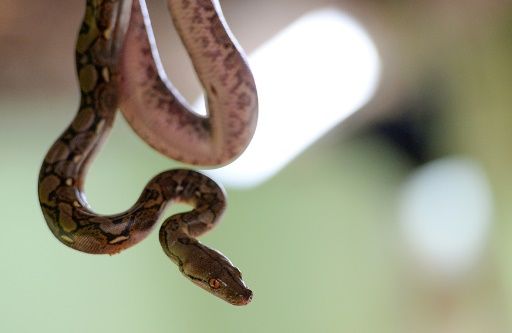
Chanel has made the world a little safer for snakes

Related Article:


Tuesday, December 4, 2018

Service dog accompanies late president Bush on final farewell

Yahoo – AFP, December 3, 2018

Sully, George H.W. Bush's service dog, seen at Ellington Field in Houston as
the president's casket left for Washington (AFP Photo/David J. Phillip)

Washington (AFP) - A US president is believed to have said the easiest way to find a friend in Washington was to get a dog. On Monday, George H.W. Bush's faithful service dog Sully made a final journey back to the US capital with the late president.

Two days after Bush's death at age 94, family spokesman Jim McGrath posted a touching photograph of the yellow Labrador retriever lying down in front of Bush's casket, with the accompanying phrase "Mission Complete" and the hashtag #Remembering41.

The two-year-old Sully has been at Bush's side since June, just weeks after the death of the president's wife Barbara, to whom he was married for 73 years.

Bush's son George W. Bush, the nation's 43rd president, posted the photograph on Instagram, with a message announcing Sully's transfer to Walter Reed National Military Medical Center in suburban Maryland.

"As much as our family is going to miss this dog, we're comforted to know he'll bring the same joy to his new home, Walter Reed, that he brought to 41," the younger Bush wrote. His post has received a quarter million likes.

Sully is named after retired airline pilot Chesley "Sully" Sullenberger III, who gained fame when he landed a damaged passenger jet on New York's Hudson River in 2009.

Historians believe Harry S. Truman's folksy aphorism about friends in Washington and dogs is probably apocryphal -- the 33rd US president didn't actually like dogs -- but he would surely have fallen for Sully's charms.

The four-legged friend is already something of an online star. Sully's own Instagram account describes the dog as "a kinder, gentler labrador," a play on Bush's words in his 1988 acceptance speech, when he called for "a kinder and gentler nation."

The account -- with 123,000 followers -- has playfully chronicled Sully's time with Bush at Walker's Point, location of the family compound in Kennebunkport, Maine.

It features a photograph of Sully laying down in front of Bush and Bill Clinton, the man who defeated him in the 1992 presidential race. The two men struck up a close friendship.

Sully was provided to Bush by America's VetDogs, a group which pairs service and therapy dogs with people with physical limitations like blindness, or those who suffer from effects of post-traumatic stress disorder.