Robber fly - Nature photographer Thomas Shahan specializes in amazing portraits of tiny insects. It isn't easy. Shahan says that this Robber Fly (Holcocephala fusca), for instance, is "skittish" and doesn't like its picture taken.

Nature by Numbers (Video)

"The Greater Akashic System" – July 15, 2012 (Kryon Channelling by Lee Caroll) (Subjects: Lightworkers, Intent, To meet God, Past lives, Universe/Galaxy, Earth, Pleiadians, Souls Reincarnate, Invention: Measure Quantum state in 3D, Recalibrates, Multi-Dimensional/Divine, Akashic System to change to new system, Before religion changed the system, DNA, Old system react to Karma, New system react to intent now for next life, Animals (around humans) reincarnate again, This Animal want to come back to the same human, Akashic Inheritance, Reincarnate as Family, Other Planets, Global Unity … etc.)

Question: Dear Kryon: I live in Spain. I am sorry if I will ask you a question you might have already answered, but the translations of your books are very slow and I might not have gathered all information you have already given. I am quite concerned about abandoned animals. It seems that many people buy animals for their children and as soon as they grow, they set them out somewhere. Recently I had the occasion to see a small kitten in the middle of the street. I did not immediately react, since I could have stopped and taken it, without getting out of the car. So, I went on and at the first occasion I could turn, I went back to see if I could take the kitten, but it was to late, somebody had already killed it. This happened some month ago, but I still feel very sorry for that kitten. I just would like to know, what kind of entity are these animals and how does this fit in our world. Are these entities which choose this kind of life, like we do choose our kind of Human life? I see so many abandoned animals and every time I see one, my heart aches... I would like to know more about them.

Answer: Dear one, indeed the answer has been given, but let us give it again so you all understand. Animals are here on earth for three (3) reasons.

(1) The balance of biological life. . . the circle of energy that is needed for you to exist in what you call "nature."

(2) To be harvested. Yes, it's true. Many exist for your sustenance, and this is appropriate. It is a harmony between Human and animal, and always has. Remember the buffalo that willingly came into the indigenous tribes to be sacrificed when called? These are stories that you should examine again. The inappropriateness of today's culture is how these precious creatures are treated. Did you know that if there was an honoring ceremony at their death, they would nourish you better? Did you know that there is ceremony that could benefit all of humanity in this way. Perhaps it's time you saw it.

(3) To be loved and to love. For many cultures, animals serve as surrogate children, loved and taken care of. It gives Humans a chance to show compassion when they need it, and to have unconditional love when they need it. This is extremely important to many, and provides balance and centering for many.

Do animals know all this? At a basic level, they do. Not in the way you "know," but in a cellular awareness they understand that they are here in service to planet earth. If you honor them in all three instances, then balance will be the result. Your feelings about their treatment is important. Temper your reactions with the spiritual logic of their appropriateness and their service to humanity. Honor them in all three cases.

Dian Fossey's birthday celebrated with a Google doodle

Dian Fossey's birthday celebrated with a Google doodle
American zoologist played by Sigourney Weaver in the film Gorillas in the Mist would have been 82 on Thursday (16 January 2014)
Showing posts with label Circus. Show all posts

Friday, November 19, 2021

France bans wild animals in circuses

France24 – AFP, 18 November 2021 
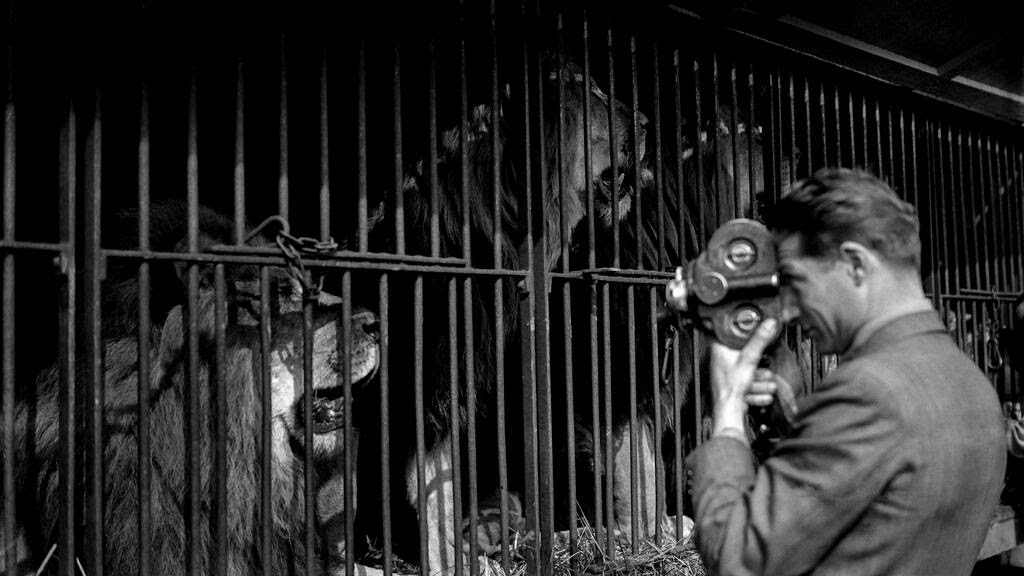
Consigned to history: The new law will ban use of lions such as these of
the Amar Circus in 1946 Paris

Paris (AFP) – French lawmakers voted on Thursday to end wild animals being used in live circus shows, spelling an end to performing tigers, lions or bears. 

Performances of wild animals will be prohibited in two years and owning them outlawed in seven years, under the wide-ranging animal rights legislation that has been under debate since 2020. 

The law, once signed by President Emmanuel Macron, will also ban live dolphin shows in the next five years and immediately end mink farming, meaning the country's last operator will close. 

Macron's centrist Republic on the Move (LREM) party called the legislation "a historic step in the animal rights combat". 

Circus owners denounced it, while some environmentalists said it did not go far enough. 

The foundation of France's most famous animal advocate, veteran actress Brigitte Bardot, welcomed "a major advance for the animal rights cause in France". 

As well as the measures targeting circuses, the new law will raise the maximum penality for mistreating animals to up to five years in prison and a fine of 75,000 euros ($85,000), and will tighten restrictions on the sale of pets. 

Loïc Dombreval, the LREM co-sponsor of the law, conceded that other controversial issues had not been included within the scope of the legislation, which won cross-party support in both houses of parliament. 

"There will inevitably come a day when... we will debate sensitive issues such as hunting, such as bull-fighting, or some animal-rearing practices," said the lawmaker, who is also a veterinarian. 

'Arbitrary law'

Environmentalists had called for measures to improve the conditions inside industrialised animal farms, which will require "a change in our agricultural model", Senator Daniel Salmon said on Thursday. 

Issues such as hunting and bull-fighting are especially sensitive because they are staunchly defended by supporters in rural areas as long-standing cultural practices. 

Farms that make foie gras pate in France -- which force-feed birds such as geese and ducks to artificially bloat their livers -- have also long been targeted by campaigners. 

The 120 circus owners in France are likely to protest against the restrictions placed on their livelihoods and have warned that some animals might end up abandoned. 

"It's an arbitrary law because there are not mistreated animals in our circuses," William Kerwich, head of the circus animal trainers' union, told AFP. 

He said there would be a reaction from his members on Monday, and a legal appeal. 

The new legislation also bans the use of wild animals in television shows, nightclubs and private parties. 

Polls show that a vast majority of French people support the law, and dozens of cities and towns around the country have already banned travelling circuses that use animals. 

The changes will bring France into step with more than 20 European countries that have either banned or heavily restricted the use of animals for entertainment.

Saturday, November 16, 2019

As France dithers, Paris bans use of wild animals in circuses

Yahoo –AFP, Ambre TOSUNOGLU, Mariette Le Roux, 15 November 2019

Polls show a vast majority of French people to be against the use of animals
for entertainment

While France mulls whether to join a majority of EU nations in banning wild animals in circuses, the city of Paris pressed ahead Friday with its own plan to outlaw the practice amid fresh concerns over cruelty.

A proposal was adopted by the municipal council late Friday that will see permits withheld from 2020 for circuses that wish to operate in the French capital while employing exotic creatures.

"We can congratulate ourselves on this decision which marks a societal advance desired by all French people," said Penelope Komites, a Paris councillor responsible for nature in the city, adding she hoped the national government would follow suit.

Polls show a vast majority of French people to be against the use of non-domestic animals for entertainment, and dozens of cities and towns have banned travelling circuses featuring wild beasts.

But there is no national ban and the country still has dozens of circuses confining hundreds of animals -- roughly 500 according to anti-circus campaigners One Voice, and more than double that according to rights group PETA France.

There are no official statistics.

Most circus animals are lions, but there are also tigers, elephants, two hippos, baboons, macaques, snakes and parrots, camels, bears, ostriches and even zebras.

"The number of animals has decreased drastically due to public pressure," One Voice president Muriel Arnal told AFP.

But hundreds still "live in tiny, tiny cages inside trucks. They have nowhere to hide, they are stressed, and also they have nothing to do. Then they are taken out for the show or for... training which is very violent... They are never at peace."

Worldwide, abot 40 countries have fully or partially banned the use of wild 
animals in circuses

'Strong announcements'

The controversy was revived this week when a performing bear called Mischa died at an animal refuge southwest of Paris, two months after he was rescued from owners who allegedly subjected him to years of ill-treatment.

Mischa was allegedly kept in horrendous conditions with two other bears owned by an animal trainer couple, who displayed them at fairs and in restaurants.

Two years ago, a circus tigress named Mevy escaped from her enclosure to roam the streets of Paris where she was controversially shot dead in the name of public safety.

Circus elephants and camels have also escaped in France in the past.

In western Europe, 12 countries have a full, national ban on wild animals in circuses, and another 11 have partial, species-specific injunctions, according to a map compiled by One Voice.

Four European countries, including France, have only municipality-level bans, and two -- Lithuania and Luxembourg -- have none at all.

Worldwide, about 40 countries have fully or partially banned the practice.

The French government in April launched a working group to investigate the well-being of animals in circuses, zoos and dolphinariums. In May 2017, the French government banned the breeding in captivity of dolphins and killer whales.

And last Sunday, Environment Minister Elisabeth Borne promised further "strong announcements in the coming weeks".

Meanwhile, Paris and about 65 other French municipalities have moved on their own to put an end to the practice.

The French government in April launched a working group too investigate the 
well-being of animals in circuses, zoos and dolphinarium

'Life not worth living'

Under the new Paris prohibition, any circus that agrees to give up its animals will get funding of about 50,000 euros ($55,000) over three years to help it adapt.

"It's about time!" said Amandine Sanvisens, president of animal rights group Paris Animaux Zoopolis.

PETA also welcomed the move, which it said sent "a clear message to the French government that it is high time to ban the use of wild animals in circuses at a national level."

Arnal said that for circus animals, "It is not a life worth living."

Many "are not fed unless they perform. Then there is the beating... You cannot force a tiger to jump through fire unless they are afraid of something that is more frightening than fire."

A poll by Opinion Way last month found that about two-thirds of French people object to the use of wild animals in circuses, which only about 10 percent have visited in recent years.

But circus owners disagree: William Kerwich of the Cirque Royal defends the practice as a "tradition" and accused Paris of playing politics "to get votes in the next municipal election."

Komites said the new measure cannot be enforced, for now, for two of France's biggest circus companies -- Bouglione and Gruss -- who have refused to sign up voluntarily.

The Bouglione group owns the property where it hosts the Cirque d'Hiver in Paris, unlike most other circuses which operate on public property.

The Gruss group, meanwhile, will have no choice but to yield once its licence comes up for renewal.

Polls show a vast majority of French people to be against the use of animals for entertainment

Worldwide, abot 40 countries have fully or partially banned the use of wild animals in circuses

The French government in April launched a working group too investigate the well-being of animals in circuses, zoos and dolphinariums.

Related Article:


Tuesday, October 29, 2019

Aussie racing industry pledges millions for retired horses

Yahoo – AFP, 28 October 2019

The Victoria Racing Club said 10% of ticket sales from the Melbourne Cup Carnival 
and 5% of annual membership fees would go to fund retired horse welfare
(AFP Photo/PAUL CROCK)

Australia's racing industry on Monday pledged millions of dollars for the care of retired racehorses, as it scrambles to address the fallout from animal cruelty allegations that sparked a major outcry.

National broadcaster ABC revealed this month that thousands of retired animals were being sent to abattoirs in secret, where many were allegedly beaten and abused before being killed.

Racing Victoria said it would spend at least Aus$25 million (US$17 million) over the next three years to expand an existing program of rehoming retired horses and to create a new welfare taskforce designed to prevent cruelty to racing animals.

The organisation's chairman, Brian Kruger, said it was clear the industry needed to "step up and do more".

"It's incumbent on us to ensure our horses have opportunities for a rewarding life after racing," he told reporters in Melbourne.

Separately, the Victoria Racing Club said 10 percent of ticket sales from the Melbourne Cup Carnival and five percent of annual membership fees would go toward a new equine welfare fund, which it is seeding with an initial Aus$1.5 million.

About 300,000 people attend the four-day Carnival each year, with tickets to next week's prestigious Cup race costing $90 for a general admission pass and up to hundreds of dollars for exclusive packages.

Liz Walker, the CEO of animal welfare charity RSPCA in Victoria, said the measures were a "good start" but did not go far enough.

"It tends to be focused towards the end-of-life of racehorses and we would say they really have to go right back to the beginning, and we really do need to have that birth-to-death reporting and recording as well as injury statistics," she told the ABC.

While the slaughter of racehorses is not illegal in Australia, the ABC investigation found the practice was far more widespread than acknowledged.

The racing industry insists that less than one percent of retired thoroughbreds end up in an abattoir or knackery, but the ABC claimed about 4,000 horses "disappeared" each year, with meat from slaughtered animals being shipped abroad for human consumption and pet food.

The Queensland government last week announced an inquiry into the treatment of horses at abattoirs in response to the revelations.

Related Article:


Monday, October 21, 2019

Rescued circus elephant Ramba arrives at Brazil sanctuary

Yahoo – AFP, October 20, 2019

An elephant named Ramba that used to perform in circuses rests after arriving
at the Brazilian Elephant Sanctuary (AFP Photo/Rogerio Florentino)

Chapada dos Guimarães (Brazil) (AFP) - An Asian elephant that spent decades performing in South American circuses has started a new life in an open-air sanctuary in Brazil, after travelling thousands of kilometers by plane and truck from a Chilean zoo.

Ramba's much-anticipated arrival at the 1,133-hectare (2,800-acre) Elephant Sanctuary Brazil in the central west state of Mato Grosso late Friday was broadcast live on Facebook and viewed thousands of times.

The elephant, estimated to be more than 52 years old, worked in circuses in Argentina and Chile before she was rescued by activists in 2012.

She was then kept in a roadside zoo in Rancagua, in central Chile, while her rescuers searched for a new home.

Her ordeal left her with abscesses as well as kidney and liver problems.

Ramba was flown to the Viracopos international airport near Sao Paulo on Wednesday -- a day before heavily armed gunmen raided the cargo terminal in a daring heist.

She was then transported by flat-bed truck to the sanctuary in Chapada dos Guimaraes, which was opened in 2016 with the help of US-based Global Sanctuary for Elephants (GSE) -- the first of its kind in Latin America.

Ramba joins two other female Asian elephants, Rana and Maia, also former circus performers.

Videos of Ramba's road trip in Brazil were posted online. One shows her munching on watermelons in a metal crate on the back of a truck.

Ramba was accompanied by GSE chief Scott Blais as well as a veterinarian, volunteers and Brazilian federal police.

"Ramba needs a quiet place, one where she feels safe and is not on display, where she is surrounded by others of her kind who truly understand her and can help her to open her heart fully," Blais said in a statement.

"She needs sanctuary."

Sunday, September 1, 2019

Denmark to retire its last four circus elephants

Yahoo – AFP, August 31, 2019

Denmark is set to retire its last four circus elephants. Here, firefighters spray water
 to cool an elephant in high temperatures at the Arene circus in Gilleleje (AFP
Photo/Mads Claus Rasmussen)

Copenhagen (AFP) - The government of Denmark will buy the country's last four circus elephants in order to retire them, a minister said Saturday, as more countries move to shield wild animals from the practice.

Highly regulated, though still controversial, elephants, sea lions and zebras are the only animals that can be used in circuses in Denmark.

But a new anti-cruelty law will be introduced to parliament soon to impose a blanket ban for all animals, the ministry of food, agriculture and fisheries said in a statement.

The government will pay 11 million krone ($1.6 million, 1.4 million euros) to buy Ramboline, Lara, Djunga and Jenny, it said.

The animals will be sent to a zoo to live out their last days, though it is not yet clear which one.

"The elephants will be sent to the establishment that can offer them the highest level of well-being," said the ministry.

More than 40 countries around the world, about half of them in Europe, have restricted or banned the use of wild animals in zoos.

Related Article:


Wednesday, July 11, 2018

Animals still a draw, despite shrinking crowds, says Chinese circus

Yahoo – AFP, Xin LIU, Joanna CHIU, July 10, 2018

A caged Siberian tiger at the Chinese Prosperous Nation Circus Troupe while
in Dongguan (AFP Photo/NICOLAS ASFOURI)

A crowd of just 10 people watched the endangered Siberian tiger roar on command on his hind legs and pounce through hoops inside the big top of the Chinese Prosperous Nation Circus Troupe.

Lions and a young bear with a wound on its snout followed, performing tricks for the few who braved the sweltering heat in southern Guangdong province to help keep the travelling circus going for another day.

The use of wild animals in circus shows has come under growing criticism around the world, with some countries banning the practice, but for the Chinese troupe, the beasts are considered a major attraction.

"Many Chinese live in big cities where it's hard to get out into the wilderness. We bring nature to them," Li Weisheng, the troup's manager, told AFP.

Circuses have a long history in China. Called "maxi", pronounced "mah-shi" meaning "stunts on a horse", they have a history going back more than 2,500 years and would often pair acrobatic performances with stunts on galloping horses.

A Harbin black bear performs at the Chinese Prosperous Nation Circus Troupe, 
which considers its animals a major attraction (AFP Photo/NICOLAS ASFOURI)

The use of large cats, monkeys and bears is a more recent practice.

China has some of the world's laxest animal rights laws, and campaigners have long called for tougher regulations on the treatment of animals in travelling circuses.

The two owners of the troupe, Li Rongrong and Li Ruisheng, were arrested in 2016 for illegally transporting rare and endangered animals and sentenced to 10 and eight years in prison, respectively, but were cleared of all charges at a second trial last year.

The troupe's animals -- two African lions, a two-year-old black bear, a pack of dogs and the tiger -- spend most of their time in tiny metal cages under a big tent.

The animals are a major draw, Li, the manager, said, standing next to the red and white striped tent in the city of Dongguan, although he admitted attendance has dropped in recent years.

The tiger and a lioness with a cut tail -- both about a year old -- share one cage, in which they restlessly pace around each other. A few times a day, they are allowed to play in the circus ring.

The members of the Chinese Prosperous Nation Circus Troupe say they will do what 
they have to do to keep their tradition alive, despite falling attendances (AFP Photo/
NICOLAS ASFOURI)

The lone bear grasped the top bars of his cage and swung his body back and forth.

In the past few years, multiple videos have emerged of apparent animal abuse in China, such as a circus tying down a Siberian tiger for audience members to sit on for photos, which sparked widespread outrage.

Chinese people are increasingly calling for better protection for captive animals.

The members of the Chinese Prosperous Nation Circus Troupe, however, say they will do what they have to to keep their tradition alive and insist they are working in the interests both of the public and the animals.

"We are helping the public learn more about nature and animals," said Li.

Tuesday, December 26, 2017

Nepal's last known two dancing bears rescued: officials

Yahoo – AFP, December 24, 2017

Two rescued bears are transported from a police station in Nepal's southern
Rautahat district to the Parsa Wildlife Reserve, as seen in a photo taken on
December 20, 2017 and released by World Animal Protection (AFP Photo/Handout)

Kathmandu (AFP) - Nepali authorities have rescued the country's last known "dancing bears", officials said Sunday, in a major step towards ending the medieval tradition of abuse of the beasts for entertainment.

The Himalayan nation banned the practice of performing bears back in 1973 but the tradition, an occupation for some street performer communities, lingered on in parts of its southern region.

Police and animal charities said they spent more than a year hunting the captors of the two sloth bears before they were traced to the Rautahat district near the border with India on Tuesday.

"We received information that they were in our area and managed to rescue the bears," district police chief Yagya Binod Pokharel told AFP.

Dancing bears are captured and bought as cubs and taught to dance on their hind legs. Their snouts are pierced with a heated rod so they can be controlled by the tug of a rope or chain.

Animal activists said the rescued bears -- 19-year-old male Rangila and Sridevi, a 17-year-old female -- showed signs of trauma such as cowering, pacing and paw-sucking.

"We are thrilled that the last two known Nepali dancing bears have been rescued from their lifetime of suffering... our hard effort and dedication has helped to bring an end to this illegal tradition in Nepal," said Manoj Gautam of the Jane Goodall Institute of Nepal, which worked with the police and World Animal Protection to rescue them.

The bears were located by tracking the owners' mobile phones.

The bears are being cared for by the Parsa Wildlife Reserve, Nepal's largest such reserve.

Dancing bears on the Indian subcontinent date back to the 13th century, when trainers belonging to the Muslim Qalandar tribe enjoyed royal patronage and performed before the rich and powerful.

In neighbouring India, the practice came to an end in 2012, decades after an official ban in 1972.

Sloth bears, a critically endangered species, are found in India, Nepal, Sri Lanka and Bhutan. But shrinking habitats and rampant poaching have reduced their numbers, according to the International Union for Conservation of Nature.

The IUCN has put them on its red list of threatened species and their total estimated population is 20,000.

They can grow up to 1.8 metres (six feet) tall and weigh up to 140 kilograms (310 pounds).

Thursday, September 7, 2017

Dutch give big cats hunting lessons in return to the wild

Yahoo – AFP, Sophie MIGNON, September 6, 2017

The hunting simulator is operated by a joystick and aims to return the big
cats to peak condition and ultimately, possibly, to the wild (AFP Photo)

Anna Paulowna (Netherlands) (AFP) - Suspended from a large butcher's hook, a prime piece of raw steak glides and then zigzags through the air in a big arena under the watchful eye of Dumi, the lioness.

With her hunter's instinct taking over, the big cat runs down her "prey" across the rocks and ponds of an artificial savannah at a lion sanctuary north of Amsterdam, then hooks her claws into her quarry after a spectacular leap.

Perhaps one day, thanks to this unique hunting simulator manipulated by a joystick, former circus performer Dumi will be able to hunt on African plains.

"It's a system which is meant to train the animals and not only give them back a little of their instinct, but also improve their motor control, their muscles, strength and reactions," said Daphne Pels, a keeper at the Stichting Leeuw (Lion Foundation) refuge.

There are 35 wild cats at the sanctuary in the small town of Anna Paulowna, some 80 kilometres (50 miles) north of Amsterdam.

Most have been born in captivity, and the foundation aims to get the big felines -- lions, tigers, cougars and leopards -- back into peak condition to improve their lives and ultimately, even to hunt in the wild.

The big cats train in an artificial savannah and are challenged according to
their physical condition, while some have become lazy in captivity (AFP Photo)

 'Dependent on humans'

The cats were mostly rescued from inexperienced and sometimes malicious private owners.

Some are survivors of circuses that used wild animal acts -- now partially or totally banned in some EU countries -- and find it too expensive to feed the rapacious carnivores that can devour up to six kilogrammes (13 pounds) of meat a day.

Like Omar. Used as a cub by a circus to attract tourists who could hug the baby lion for selfies, Omar was eventually sold to a Slovakian mafia boss, who kept him in his garden as a pet.

When the foundation rescued Omar in March 2015, the male lion suffered from advanced malnutrition and was basically just skin and bones, with no muscle, and covered in sores and faeces.

It took Omar two years to recover. He now sports a large fawn-coloured mane, but he bears a scar on his muzzle and his small, amber eyes remain vigilant and mistrustful.

"These are animals that depend on humans a lot because they were bottle-fed, born in the circus and declawed" by their tamers or owners, said Pels.

"We can't just put them back in the wild," she told AFP.

Established in 2011 by a passionate businessman, the Stichting Leeuw (Lion 
Foundation) refuge in The Netherlands is looking after 35 wild cats (AFP Photo)

Chasing prey

Now Sarabi, the lioness, and Ambra and Laxmi, two tigresses, regularly train in this "playground" of roughly 80 metres by 50 metres (262 feet by 164 feet), which took three years to build.

Prey can vary: sometimes it's a toy, sometimes a piece of meat and even, when there's no audience, a dead rabbit or pigeon to help rekindle their hunting instincts.

The cats' target is suspended a few feet up in the air and moved around in a random fashion by keepers using the joystick in a small control room. The aim is to push the cats, which have sometimes become lazy in captivity, to chase their prey.

The small, artificial savannah is dotted with obstacles such as rocks, pools and tree trunks "so the animals have to learn how to watch and run at the same time," Pels said.

"The first few times we see them maybe bump their noses or accidentally fall into the water," she said laughing.

Training is adapted to each individual depending on its physical condition, age and needs.

"We are able to give the animals some training (too), but it's natural training. They don't have to jump through a hoop."

A puma, as well as lions, tigers, cougars and leopards, are among the big 
felines at the foundation and most were born in captivity (AFP Photo)

Back to Africa

Established in 2011 by a passionate businessman and financed through private donations, the foundation hopes to relocate Omar back to Africa this year "to give him a family."

Relocation costs 25,000 euros ($29,700).

Now aged five, Omar will join five other lions already living at the Emoya sanctuary in the Bahati wildlife estate in northern South Africa. Two Bengal tigers are also expected to join the Wildlife Friends Foundation of Thailand (WFFT).

Once in their new homes, the felines have to learn to adapt. Those too dependent on humans will live in a small one- to two-acre area of savannah.

Others move on to the next stage, living in an enclosure of 50 to 100 hectares learning to hunt for real.

But it's a long-term project.

"We have to start with small prey and have to observe whether they will develop skills" to be able to feed themselves before introducing larger animals, Pels said.

"For now the most important thing is to bring the animals to Emoya to upgrade their lives and free up space for new animals that need help," Pels added.

This includes elephants, which the foundation hopes to take in in the future.


Monday, January 16, 2017

Ringling Bros. circus closing show after 146 years

Yahoo – AFP, Olivia Hampton, January 15, 2017

Ringling Bros. and Barnum & Bailey Circus executives cited high operating costs
and declining ticket sales as some factors in the decision to close after
146 years (AFP Photo/EMMANUEL DUNAND)

Washington (AFP) - Ringling Bros. and Barnum & Bailey Circus announced Saturday it will host its final show in May, ending "The Greatest Show on Earth" after 146 years.

Company executives cited high operating costs and declining ticket sales after the traveling American circus retired its popular elephants as reasons for drawing the curtain on a celebrated spectacle that traces its origins to politician and showman P.T. Barnum's first show in 1871.

Animal rights groups cheered the move as a success story following decades of activism against the use of animals in the circus.

Kenneth Feld, chairman and CEO of show producer Feld Entertainment, said he and his family came to the "difficult" decision to end the circus "after much evaluation and deliberation."

"Nearly 50 years ago, my father founded our company with the acquisition of Ringling Bros.," he said in a statement on the group's website."

"The circus and its people have continually been a source of inspiration and joy to my family and me, which is why this was such a tough business decision to make."

The group has a total of 30 stops scheduled on its 2017 tour.

The final "Circus XTREME" show will take place at the Dunkin' Donuts Center in Providence, Rhode Island on May 7, while the group's "Out Of This World" tour will take place May 21 at the Nassau Veterans Memorial Coliseum in Uniondale, New York.

Kenneth Feld, chairman and CEO of show producer Feld Entertainment, said he
and his family made the "difficult" decision to end the circus "after much evaluation
and deliberation" (AFP Photo/EMMANUEL DUNAND)

Freak show origins

Although Barnum's first show took place decades before, it was not until 1919 that a group started by five Wisconsin brothers, Ringling Bros. World's Greatest Shows, merged with Barnum & Bailey's Greatest Show on Earth.

While the Ringling brothers had been better known for traditional circus fare, Barnum was dubbed the "Prince of Humbugs," known as a shameless promoter of incredible hoaxes, freak shows and zoological curiosities.

One such object was the Fiji mermaid, or Feejee mermaid, which was in fact no less than the head and torso of a monkey sewn to the body and tail of a fish.

Barnum launched his traveling circus after fires destroyed his Barnum's American Museum. Two whales were boiled alive in their tanks during one of the fires.

In 1881, Barnum teamed up with James Bailey to run their "Greatest Show on Earth," making a fortune along the way.

In May 2015 Ringling Bros. and Barnum & Bailey Circus retired its performing 
elephants after major criticism from animal rights groups (AFP Photo/
EMMANUEL DUNAND)

Animal rights controversies

People for the Ethical Treatment of Animals cheered Ringling's latest decision as the end of an era, and called for other circuses to follow their lead.

"After 36 years of PETA protests, which have awoken the world to the plight of animals in captivity, PETA heralds the end of what has been the saddest show on Earth for wild animals, and asks all other animal circuses to follow suit, as this is a sign of changing times," the group's president Ingrid Newkirk said in a statement.

Wayne Pacelle, president and CEO of the Humane Society of the United States, joined in.

"A major moment as big brands that harm animals fade away and more humane businesses emerge I applaud @RinglingBros announcement," he tweeted.

In May 2015, the circus retired its performing elephants after major criticism from animal rights groups, including widely circulated videos from PETA that showed a male handler hitting elephants with an ankus, or pointed stick.

The Ringling Brothers herd was the largest in the Western hemisphere for Asian elephants, listed as an endangered species by the International Union for the Conservation of Nature, which says 40,000-50,000 exist in the world in highly fragmented populations.

"It is sad. You feel it is the end of an era," long-time trainer Trudy Williams told AFP at the time.

Ringling Brothers was also embroiled in a 14-year lawsuit in which animal rights groups alleged the circus was mistreating its herd.

The case was eventually thrown out after a lead witness was found to have been paid for his testimony by animal rights groups.

By 2014, the plaintiffs, including the American Society for the Prevention of Cruelty to Animals and the Humane Society, had been ordered to pay the circus $25 million to reimburse its legal fees.


An elderly elephant named Mysore gets a pedicure at the Ringling Bros. and
Barnum and Bailey Center for Elephant Conservation in Polk City, Florida on March 8,
2016 (AFP Photo/Kerry Sheridan)

Related Article: